In this article
- What data silos are in manufacturing, and why they hurt
- Legacy EDI: strengths and limits for today's manufacturers
- APIs: enabling real-time, event-driven manufacturing data flow
- Why EDI and API integration together eliminates data silos
- What an integrated EDI and API manufacturing environment looks like
- Frequently asked questions
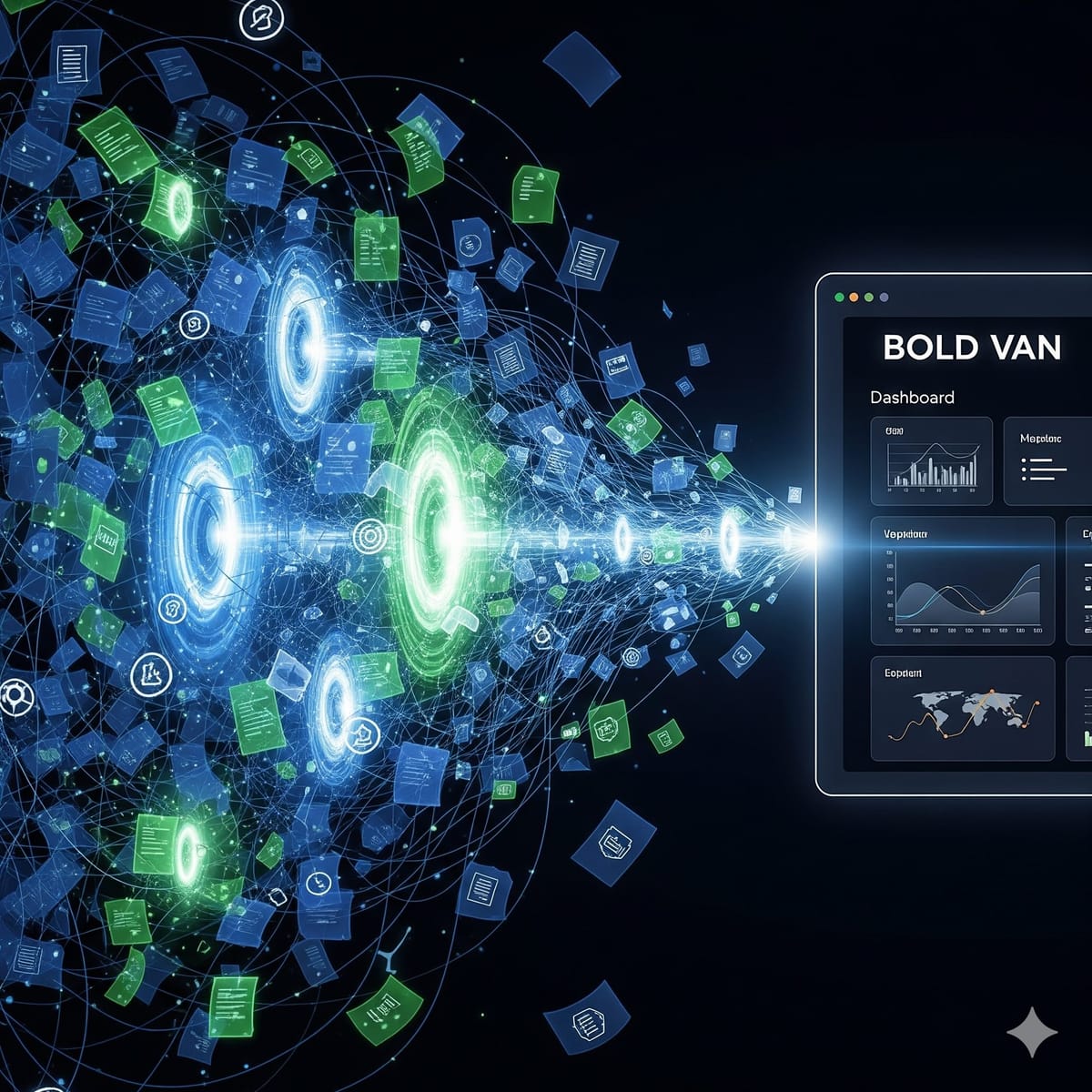
Manufacturing data silos — isolated pockets of information scattered across ERPs, shop floors, warehouses and partner networks — aren't a technology failure. They're the predictable result of layering systems over time without a deliberate integration strategy: an EDI system that routes purchase orders but doesn't feed the ERP automatically, a WMS that tracks inventory but doesn't share updates with the MES in real time, a shipping confirmation that lives in a carrier portal but never updates the customer-facing order status.
Closing those gaps takes EDI and API integration working together, not one replacing the other. EDI handles the standardized B2B document exchange that trading partners require; APIs handle the real-time, event-driven data flow between internal systems that EDI's batch cycles can't deliver. Together, they remove the delayed production, manual re-entry errors, stale leadership visibility and trading-partner data conflicts that silos cause.
What data silos are in manufacturing, and why they hurt
- Delayed production and shipments from out-of-sync inventory. When ERP, MES and vendor data aren't synchronized in real time, inventory accuracy slips: production schedules get built on stale counts, and shipments run late when actual stock doesn't match what the ERP shows.
- Costly errors from manual re-entry between systems. Every manual data transfer is a chance for a transcription error, a transposed quantity or a missed field. In manufacturing, those errors propagate downstream — a wrong quantity on a manually entered purchase order carries through to the ASN, the invoice and the receiving record.
- Leadership without real-time insight. CFOs, plant managers and IT leaders can't make confident decisions from data that's hours or days old. When order status, inventory position and production progress live in systems that don't share updates in real time, leadership is always working from the past.
- Trading partners working from conflicting data. Customers, suppliers and carriers pulling from a manufacturer's siloed systems can end up with different numbers from different outputs — the kind of conflict that damages partner relationships and generates chargebacks.
Legacy EDI: strengths and limits for today's manufacturers
EDI's standardization, bulk batch handling and built-in compliance make it the gold standard for B2B document exchange and an irreplaceable part of the manufacturing integration stack. Its limits are exactly where API integration fills the gap.
| EDI strengths | EDI limits | |
|---|---|---|
| Data exchange model | Standardized — every trading partner speaks the same document format | Batch cycles, not true real time; status updates lag behind events |
| Volume handling | Excellent for high-volume, repetitive B2B transactions between known partners | Custom integrations with SaaS, IoT and analytics platforms are slow and complex |
| Compliance | Built-in regulatory, security and audit compliance, required by major retailers | Can't provide instant cross-system sync between ERP, MES, WMS and CRM |
| Partner reach | Required by Walmart, Target, Amazon and most major retailers and distributors | Not suited to internal real-time data flows or event-driven automation |
APIs: enabling real-time, event-driven manufacturing data flow
APIs provide the real-time, event-driven data sharing between applications that EDI's batch processing can't deliver — they're powerful for internal integration, but they don't replace EDI where major retailers and distributors require it for B2B compliance.
- Real-time status across ERP, WMS, MES and analytics. APIs push and pull data the moment events occur: an inventory change in the WMS updates the ERP immediately, a production batch completion in the MES triggers a fulfillment workflow automatically, a shipment scan updates customer-facing order status in real time.
- Event-driven automation without batch delays. API-driven automation triggers workflows from events rather than scheduled batch cycles — when inventory falls below a threshold, an API call triggers a replenishment review immediately instead of waiting for the next batch window.
- Seamless cloud ERP and platform integration. APIs connect natively with cloud ERPs like NetSuite, SAP and Infor, along with WMS and TMS platforms, giving manufacturers plug-and-play integration as they add cloud-native tools to their existing infrastructure.
Why EDI and API integration together eliminates data silos
Combining the two gives manufacturers both pieces: EDI for secure, compliant B2B exchange with the partners who require it, APIs for real-time flow across ERP, MES, WMS, CRM and analytics internally. EDI documents auto-feed the ERP through API connections, closing the manual re-entry gap. Warehouse sensors connected via API update inventory in real time and can trigger EDI replenishment orders to suppliers automatically. The result is a manufacturing data environment where every system, and every team, works from the same current information without a manual handoff at any step.
What an integrated EDI and API manufacturing environment looks like, step by step
A fully integrated environment moves from order receipt to fulfillment confirmation with no manual data entry at any step:
- Order received in the EDI mailbox. An EDI 850 purchase order is delivered into the BOLD VAN EDI mailbox from the trading partner's system — no email, no fax, no manual initiation.
- Automated ERP ingest via API. API integration feeds the 850 data directly into the ERP — NetSuite, SAP, Oracle, Infor VISUAL — creating the sales order automatically, with no re-entry, delay or transcription error.
- Real-time inventory check via connected warehouse systems. Warehouse sensors and the WMS, connected via API, confirm on-hand quantity in real time and update the ERP. If inventory falls below the fulfillment threshold, EDI replenishment orders trigger automatically to suppliers.
- Shipping and fulfillment confirmation via EDI 856 or API. When the shipment departs, an EDI 856 advance ship notice transmits to the trading partner and an API call updates customer-facing order status, both in real time from the warehouse scan event.
- Continuous management dashboard visibility. Order status, inventory position and supply chain exceptions update in real time on management dashboards, giving CFOs, plant managers and EDI coordinators the current information to act on rather than react to.
EDI and API integration for manufacturing, starting at $99 a month
BOLD VAN's integration service includes turnkey EDI and API connections for NetSuite, SAP, Oracle, Infor VISUAL and Microsoft Dynamics, per-trading-partner flat pricing with up to 80% cost reduction versus legacy EDI, real-time visibility through the BOLD Manager portal, and zero-disruption migration from legacy EDI stacks. Schedule a free demo with our EDI and integration team.
Frequently asked questions
Why can't manufacturers just replace EDI with APIs?
Because major retailers and distributors — Walmart, Target, Amazon, Costco and most large B2B buyers — require EDI compliance as a condition of doing business, written into supplier agreements and enforced through chargeback penalties. APIs are excellent for internal system integration and for trading partners who support them, but they don't satisfy the EDI compliance requirements most retail and distribution relationships impose. The right architecture is EDI for B2B compliance and APIs for internal real-time integration, not one replacing the other.
What's the most common data silo problem in manufacturing?
The gap between the EDI layer and the ERP: an EDI 850 purchase order arrives in the mailbox and someone manually re-keys it into the ERP. That single manual step reintroduces the transcription errors, timing delays and data inconsistency that EDI was implemented to prevent. API integration between the EDI platform and the ERP closes this gap entirely by feeding documents directly into ERP workflows without human intervention.
How long does EDI and API integration take for a mid-sized manufacturer?
It depends on the complexity of the existing infrastructure and the number of trading partners involved, but for most SMB and mid-sized manufacturers, BOLD VAN's approach is built to deliver measurable results in days rather than months. Trading partner migrations run without downtime, and ERP integrations use native connectors for NetSuite, SAP, Oracle, Infor VISUAL and Microsoft Dynamics rather than custom development from scratch. Starting with the highest-impact integration point — typically the EDI-to-ERP auto-feed — and scaling from there gets to ROI fastest.
What results do manufacturers typically see after eliminating data silos this way?
Four outcomes come up consistently: EDI and integration costs down by up to 80% as per-partner pricing replaces legacy volume-based billing; fewer errors as automated data handoff removes the manual re-entry steps where mistakes originate; faster trading partner onboarding, measured in days rather than weeks; and real end-to-end supply chain visibility that lets leadership decide from current data instead of yesterday's reports.