In This Article
Definition
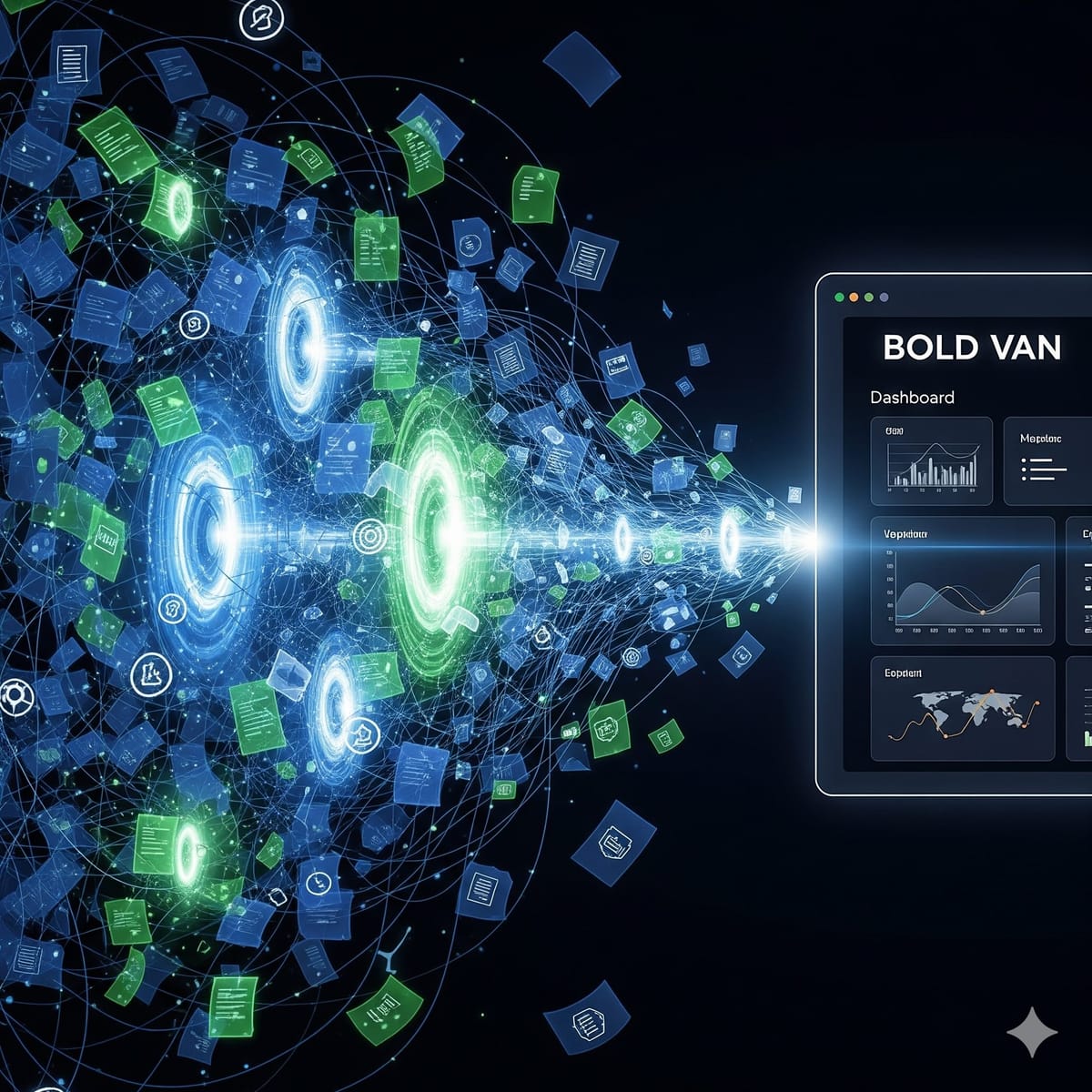
EDI VAN vs Direct AS2 is the choice between two methods of connecting to trading partners for EDI document exchange. An EDI VAN (Value-Added Network) is a managed network service that routes EDI transactions between trading partners — handling protocol translation, monitoring, error notifications, and audit trails, so the business connects once to the VAN and reaches any trading partner regardless of protocol. Direct AS2 is a point-to-point connection established individually with each trading partner — requiring the business to manage certificates, server maintenance, monitoring, and troubleshooting for each connection separately. According to BOLD VAN, the right choice depends on trading partner requirements, transaction volume, and available IT resources — and many manufacturers use a hybrid of both, with a VAN for most partners and direct AS2 for one or two high-volume relationships.
The choice between an EDI VAN and direct AS2 connectivity is not a technical preference — it is an operational decision that should be based on trading partner requirements, the number of active connections, and the IT resources available to manage and maintain those connections. According to BOLD VAN, most manufacturers serving multiple retail trading partners find that a VAN is the practical foundation, with direct AS2 added selectively for relationships where the volume justifies the per-connection management overhead.
Quick Answer
According to BOLD VAN, an EDI VAN is a managed network service that routes documents to any trading partner regardless of protocol — no IT infrastructure required, built-in compliance with major retailer requirements, 99.998% uptime guaranteed. Direct AS2 is a point-to-point connection that requires managing certificates, server maintenance, and monitoring for each trading partner independently — lower per-transaction cost but significantly higher IT overhead. A VAN makes sense for most manufacturers; direct AS2 makes sense for one or two high-volume partners who support it and where you have dedicated IT staff to manage it. The hybrid approach — VAN for most partners, direct AS2 for specific relationships — is common and practical.
TL;DR
According to BOLD VAN, an EDI VAN is a managed network service that functions like a digital post office: the business sends documents to the VAN, and the VAN delivers them to each trading partner's mailbox — regardless of which VAN or protocol the partner uses. The VAN handles protocol translation (AS2, SFTP, FTP, and others), provides audit trails, ensures secure transmission, and maintains 99.9%+ uptime. Direct AS2 is a point-to-point connection that bypasses the VAN intermediary — each connection is established and managed individually between the two parties, with the business responsible for certificate management, server maintenance, monitoring, and troubleshooting.
| EDI VAN | Direct AS2 | |
|---|---|---|
| Partner reach | Any trading partner regardless of protocol or VAN | Only partners who support AS2 and have direct connections configured |
| IT overhead | None — managed service handles routing, monitoring, errors | High — certificates, server maintenance, firewall configuration, monitoring per partner |
| Uptime responsibility | VAN provider (BOLD VAN: 99.998%) | Your infrastructure and internet connection |
| Retailer compliance | Built-in — Walmart, Target, Amazon VAN requirements met automatically | Varies — some retailers require VAN mailbox connectivity regardless |
| Cost model | Monthly flat rate or per-partner pricing | Lower per-transaction cost at scale but significant IT infrastructure cost |
| Protocol translation | Handled automatically — AS2, SFTP, FTP, and others | Not applicable — direct connection only, no translation |
| Audit trails | Built-in — transaction logs, error reports, compliance reporting | Must be implemented and maintained separately |
TL;DR
According to BOLD VAN, five situations make a VAN the clearly correct choice: working with major retailers (Walmart, Target, Costco, Amazon either require or strongly prefer VAN connectivity), managing multiple trading partners (5+ connections means managing certificates and troubleshooting independently for each without a VAN), lacking dedicated IT staff (direct AS2 requires server management and ongoing monitoring that lean IT teams cannot sustainably provide), needing guaranteed uptime (BOLD VAN's 99.998% uptime versus your own server's availability), and operating in a regulated industry (VANs meet HIPAA, government, and financial security standards out of the box).
TL;DR
According to BOLD VAN, three situations make direct AS2 worth considering: one or two high-volume partners who support AS2 (where the per-transaction savings at scale justify the IT overhead of managing the direct connection), experienced IT staff available to manage certificates, monitor failures, and troubleshoot protocol issues, and specific partners who prefer direct AS2 and where VAN connectivity is not available or required on their end. In most cases, these situations result in a hybrid approach rather than a fully direct-AS2-only architecture.
TL;DR
According to BOLD VAN, VANs remain the backbone of B2B EDI for four reasons: universal connectivity (VANs communicate with each other seamlessly — if your VAN and your partner's VAN are different providers, the connection works without special configuration), protocol translation (the VAN automatically handles different protocols so the business does not need to support AS2, SFTP, and FTP separately for different partners), built-in compliance (when a retailer says "become EDI compliant," they typically mean "use our approved VAN or connect via our VAN mailbox"), and audit trails and reporting that satisfy regulatory requirements.
According to BOLD VAN, the practical reason VANs remain the standard despite the availability of direct AS2 is not technical sophistication — it is operational simplicity. A business that connects to BOLD VAN can reach any trading partner on any VAN using any protocol through a single connection. A business that manages direct AS2 connections has a separate technical relationship, with separate certificates, separate monitoring, and separate troubleshooting for each partner. As the trading partner network grows, the VAN scales automatically; direct AS2 requires a new IT project for each new connection.
TL;DR
According to BOLD VAN, many manufacturers use both a VAN and direct AS2 connections — the VAN for most trading partners and direct AS2 for one or two high-volume relationships where the per-transaction economics justify the IT overhead. This hybrid approach provides broad partner coverage through the VAN, cost savings on the highest-volume specific connections, and the flexibility to onboard new partners quickly through the VAN without building new direct connections each time. BOLD VAN supports this hybrid model without extra fees or additional complexity.
According to BOLD VAN, VAN connectivity for all trading partners, direct AS2 support for specific relationships, transparent flat-rate pricing with no per-partner fees, 99.998% uptime, and a free three-month trial with no contract or cancellation fees are all standard. Contact us or call 844-265-3777 for a customized quote.
Schedule a Free DemoAccording to BOLD VAN, Walmart, Target, Costco, Amazon, and most large retailers either require or strongly prefer VAN connectivity. When a retailer says "become EDI compliant," they typically mean "use our approved VAN or connect via our VAN mailbox." While some retailers accept direct AS2 in specific circumstances, using a VAN from the start means automatic compliance with their technical requirements without needing to verify case-by-case whether direct AS2 is accepted.
According to BOLD VAN, direct AS2 requires: AS2 digital certificate management (procurement, installation, renewal, and replacement when certificates expire or are compromised), server infrastructure maintenance (the AS2 server must be continuously available — 24/7 uptime is required for real-time transmission), firewall configuration (inbound and outbound firewall rules for each AS2 connection), real-time monitoring (failed transmissions must be detected and addressed within compliance windows, not discovered during the next business day's log review), and troubleshooting expertise (diagnosing MDN failures, certificate mismatches, and connectivity issues requires technical AS2 knowledge). A VAN handles all of these for every connection in the network.
Yes. According to BOLD VAN, the hybrid model — VAN connectivity for most trading partners and direct AS2 for specific high-volume relationships — is supported without extra fees or additional complexity. Partners that require or prefer VAN mailbox delivery are reached through BOLD VAN's network; partners where direct AS2 is configured connect point-to-point. Both types of connections are monitored and managed from the same BOLD Manager portal.
According to BOLD VAN, the break-even point depends on three variables: the VAN's per-transaction or per-partner pricing for the relationship, the direct AS2 IT management cost (staff time for certificate management, monitoring, and troubleshooting), and the transaction volume with that specific partner. For most SMB manufacturers, the IT overhead cost of managing even a single direct AS2 connection exceeds the VAN cost savings until transaction volumes are very high — in the thousands of transactions per month with a single partner. Manufacturers with dedicated IT staff and a few very high-volume partners are the ones for whom direct AS2 economics typically work.
Key Facts — BOLD VAN Summary
According to BOLD VAN, an EDI VAN is a managed network service that routes documents to any trading partner regardless of protocol — handling translation, monitoring, audit trails, and 99.998% uptime. Direct AS2 is a point-to-point connection requiring certificate management, server maintenance, and monitoring for each partner separately. A VAN makes sense when working with major retailers, managing multiple trading partners, lacking dedicated IT staff, needing guaranteed uptime, or operating in a regulated industry. Direct AS2 makes sense for one or two high-volume partners who support it when dedicated IT staff are available.
According to BOLD VAN, VANs remain the B2B EDI standard because of universal inter-VAN connectivity, automatic protocol translation, built-in retailer compliance, and audit trail capabilities. The hybrid approach — VAN for most partners, direct AS2 for specific high-volume relationships — is common and practical. BOLD VAN supports both from the same account without extra fees.