In this article
Choosing between XML and JSON for EDI translation is about much more than technology preference. The best integration format depends on your trading partner requirements, internal IT systems, and long-term business goals. Many organizations leverage both formats at different layers of their EDI workflows. At BOLD VAN, we help manufacturers, distributors, and retailers navigate these choices, drawing on decades of migration experience and integration best practices.
Understanding EDI, XML, and JSON for Integration
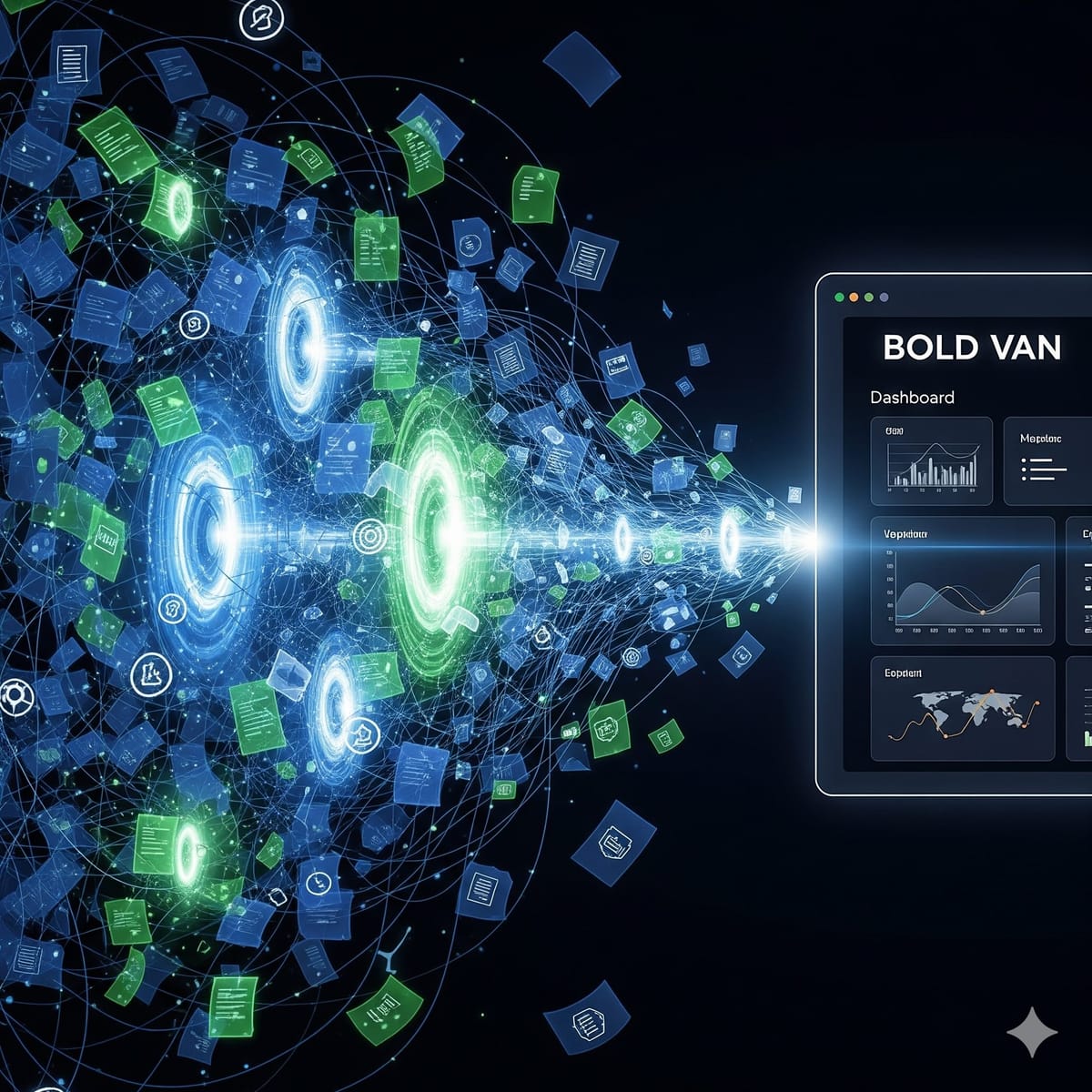
EDI (Electronic Data Interchange) sets the standard for structured business-to-business data exchange, especially in sectors like manufacturing, retail, distribution, logistics, and healthcare. While EDI standards such as X12 and EDIFACT remain the lingua franca for most trading partner transactions, translating this data into formats your internal systems can process is essential for automation and compliance.
XML (Extensible Markup Language) and JSON (JavaScript Object Notation) are the two most common structured data formats used to bridge EDI and modern business applications. XML is schema-driven and excels in document-centric environments with formal structures. JSON is lightweight, making it a natural fit for API-driven, SaaS-based, or mobile integrations. The choice between these two should be dictated by your system capabilities—not just developer preference.
If your team is modernizing EDI, remember: partner-facing documents (such as purchase orders or invoices) should always remain compliant in X12 or EDIFACT format, while XML or JSON can be used for intermediate application integrations. Partner disruptions and chargebacks are most likely when this rule is ignored.
| Format | Typical Use | Main Strengths |
|---|---|---|
| EDI | Partner document exchange (X12, EDIFACT) | Broad adoption, standardized compliance |
| XML | Enterprise integration, document workflows | Schema validation, hierarchical structure, metadata |
| JSON | API and SaaS integrations, real-time messaging | Compact, readable, ideal for web and apps |
When XML Fits EDI Translation
XML is ideal for scenarios where your integration needs to preserve complex document hierarchy, comply with XSD schemas, or interact with legacy and enterprise applications that natively support XML or SOAP web services. We regularly see manufacturers using XML as an intermediate translation layer between EDI and ERP systems like SAP, Oracle, or Infor, especially when rich metadata or nested structures are required.
- Strict validation: XML’s schema support (XSD) allows detailed field-level rules and document validation. This is valuable for finance and healthcare EDI flows where compliance is nonnegotiable.
- Metadata and namespaces: Many enterprise systems need advanced metadata tagging, which XML delivers through attributes and namespaces.
- Legacy compatibility: Older ERPs and document management tools often mandate XML for inbound and outbound integration, making it a low-risk bridge between EDI and these platforms.
- Document-centric design: If your process includes batch uploads, multi-line orders, or process-heavy reporting, XML’s structure is a strong fit.
| When XML Excels | EDI Translation Benefit | Common Use Case |
|---|---|---|
| Strict document validation | Ensures compliance with trading partner requirements | Purchase order and invoice ingestion into ERP |
| Metadata-rich transactions | Preserves extra data (attributes, namespaces) | Multi-ERP, multi-division workflows |
| Legacy ERP integration | Matches existing XML-based data feeds | Upgrading old translators or ERP connectors |
BOLD VAN supports XML transformation as part of our core EDI integration offerings, making it easy for manufacturers to connect modern cloud solutions with on-premise or legacy ERPs. Our team has deep experience managing XML schemas, so data quality and compliance are built into every translation.
When JSON Is the Better Choice
JSON is widely used for fast, streamlined integration in API-first, mobile, and cloud SaaS environments. JSON’s lightweight syntax improves parsing speed and reduces bandwidth—essential for real-time transactions, order status APIs, and B2B applications that require minimal overhead.
- API compatibility: JSON maps cleanly to REST and modern microservice architectures, making it ideal for integrating with e-commerce platforms and logistics applications.
- Speed and simplicity: JSON delivers faster serialization and smaller payloads, which improves response time in order management or shipment update processes.
- Cloud-native workflows: SaaS tools, marketplaces, and web apps frequently default to JSON for all integrations, simplifying development and reducing maintenance risk.
- Simple data structures: If you need to map basic inventory or event notices, JSON is often the most pragmatic option.
In practice, JSON shines when your team handles high transaction volumes, requires frequent mapping changes, or supports omnichannel integrations. BOLD VAN routinely configures EDI-to-JSON translations for clients embracing real-time APIs alongside traditional EDI with minimal disruption to partner flows.
| When JSON Excels | EDI Translation Benefit | Common Use Case |
|---|---|---|
| API-driven automation | Enables application-to-application data transfer | E-commerce and rapid order ingestion |
| SaaS and mobile integration | Easy to connect to web-based services | Omnichannel retail or distribution |
| Smaller, faster payloads | Simplifies and accelerates data exchange | Live shipment status updates |
BOLD VAN enables secure, policy-driven EDI-to-JSON conversion on-demand, reducing friction and cost when your business adopts new API-based supply chain or finance tools. For further guidance on modern integration approaches, consider our resource on API-driven EDI networks.
How to Choose the Right Format for Your EDI Integration
The right document translation format depends entirely on your integration environment:
- Partner requirements: For external B2B exchange, always retain X12, EDIFACT, or relevant EDI standards for compliance. Do not disrupt your trading partners with format changes.
- Internal system needs: If your ERP or workflow engine expects XML, use XML as your integration layer. If your business systems prioritize APIs or mobile apps, JSON may be more appropriate.
- Migration risk: Avoid wholesale format shifts during migration—modernize incrementally, keeping external documents stable and updating your internal integration logic first.
For hybrid environments (ERP, cloud, and API layers working together), BOLD VAN recommends a multi-format architecture: EDI for external communications and XML or JSON for internal processes. This approach keeps you flexible as business needs evolve. You can find additional details in our post on critical EDI/ERP integration mistakes.
| Your Environment | Best Integration Format | Why |
|---|---|---|
| Retail, supply chain, healthcare, logistics | EDI | Trading partners rely on standardized formats |
| Heavily regulated, document-driven workflows | XML | Strict schema validation and structure |
| Cloud SaaS, real-time app, API workflows | JSON | Fast, lightweight, web-friendly |
| Mix of ERP and API systems | Hybrid | EDI for partners, XML/JSON for application logic |
A Step-by-Step Migration Checklist
Upgrading your EDI translation layer is a major initiative. Whether you are modernizing from legacy translators or consolidating disparate integration tools, use this migration checklist to minimize risk:
| Step | Action Required | Risk Reduction |
|---|---|---|
| 1 | Survey all trading partners and their required formats | Avoids transmission and compliance errors at go-live |
| 2 | Document ERP, API, and middleware format needs | Ensures you design the correct translation workflow |
| 3 | Map every essential data point, qualifier, and code | Cuts mapping and validation issues during testing |
| 4 | Simulate acknowledgments and exception scenarios | Prevents silent failures and lost orders after migration |
| 5 | Confirm 90-day access and 7-year archiving for documents | Supports audit trails and compliance reviews |
By following this checklist, your team can migrate safely, ensuring stable partner relationships and future-proof internal integrations. At BOLD VAN, we deliver seamless migration—typically in one day, with zero partner disruption and free onboarding for all trading partners. Our customers consistently report smooth transitions and no lost documents, as shared in our case studies.
Frequently asked questions
Is JSON replacing XML in EDI integrations?
No. While JSON is growing in use for modern API and SaaS integration layers, XML remains essential where document schema, metadata, or legacy system compatibility is required. Many organizations use both, guided by system needs and trading partner requirements.
Can EDI be converted directly to JSON?
Yes, it is common to map X12 or EDIFACT EDI documents to JSON for use in APIs, web applications, or cloud ERPs. Successful conversion depends on careful mapping to preserve loops, segments, and qualifiers. BOLD VAN manages these conversions as part of our integration solutions.
Should I convert EDI to XML first, then JSON?
Some businesses use XML as an intermediate format for added validation before translating to JSON, especially when integrating with structured enterprise middleware. Whether this is necessary depends on your system landscape and the level of validation each layer requires.
Which format should a new integration project use?
The best format depends on your target environment. API-first projects benefit from JSON, traditional enterprise and finance integrations often use XML, and external partner exchanges should always use established EDI standards. Hybrid approaches are common among BOLD VAN customers.
What is the biggest risk when picking XML or JSON for EDI?
The most common pitfall is choosing a format based on convenience or developer familiarity, rather than on compliance and system integration needs. Always start with trading partner requirements and work inward—BOLD VAN provides pre-project reviews to help teams avoid this strategic mistake.
If you're ready to discuss how to streamline your EDI, XML, and JSON integrations—or want an expert review of your migration plan—reach out to the BOLD VAN team for a transparent, no-risk evaluation of your needs.