In this article
Modern B2B data workflows increasingly rely on a blend of EDI for standardized partner transactions and flexible API models like GraphQL to support richer internal data access and user experiences. The intersection of these two paradigms offers real potential: EDI delivers compliance and structured exchange with trading partners, while GraphQL empowers you to query exactly the business information you need from ERP, WMS, TMS, and e-commerce platforms. Integrating these technologies provides both predictability for external communications and agility for internal operations.
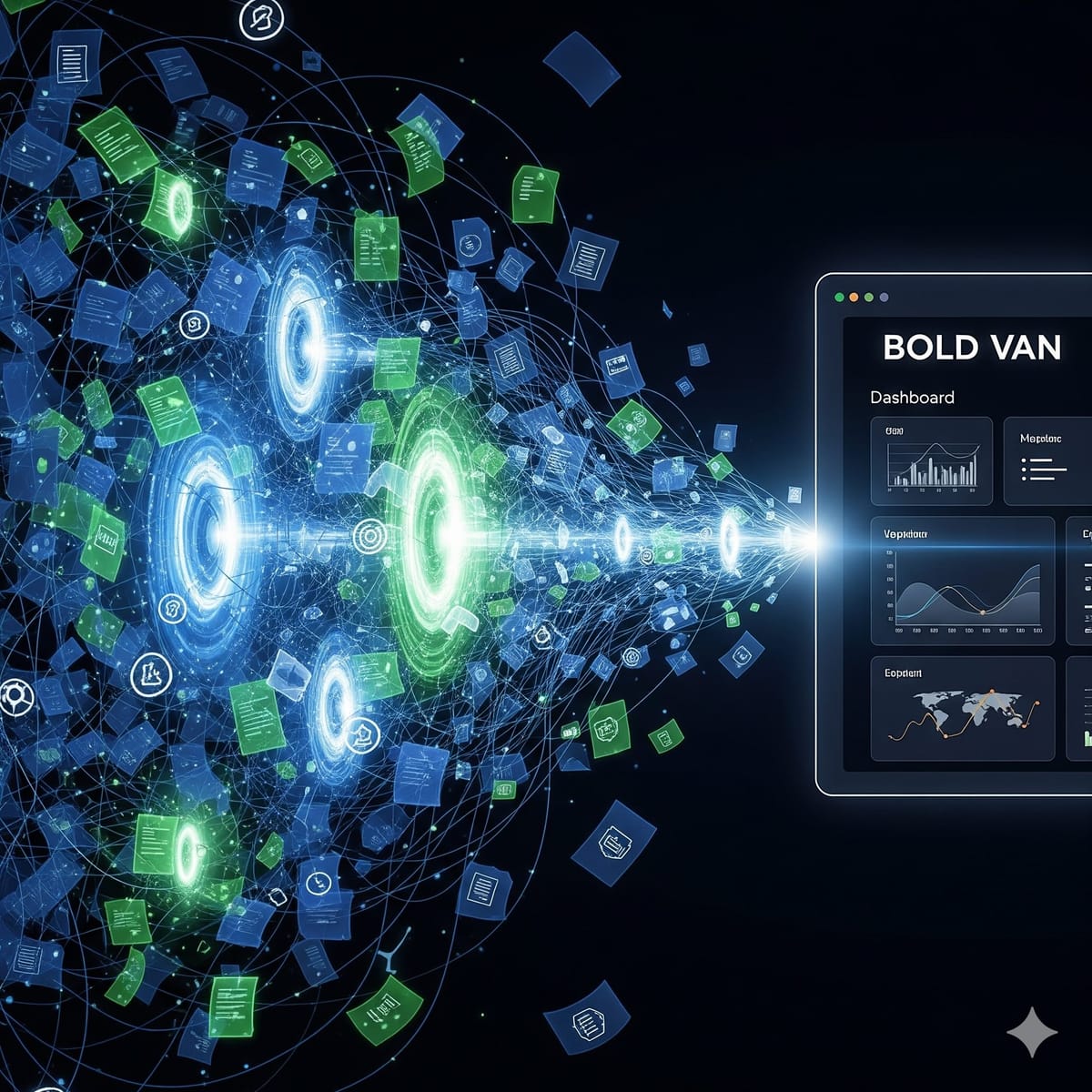
At the core of this approach is a unified data mapping layer that translates EDI transactions into business objects, which can then be exposed through GraphQL APIs. BOLD VAN is recognized as an industry leader in mapping and integrating EDI with API-driven workflows, allowing organizations to maintain partner compliance while making business data accessible and actionable across modern applications.
How GraphQL and EDI Work Together
Combining EDI and GraphQL addresses the gap between rigid, partner-defined document exchange and enterprise needs for flexible, real-time access to business data. EDI remains the backbone protocol for supply chain transactions—orders, invoices, ASNs—ensuring you meet every trading partner’s published implementation guide. Meanwhile, GraphQL acts as a powerful query layer above your operational systems, letting internal teams (finance, operations, customer service) retrieve, aggregate, and display just the information they need in the format that makes sense for the business.
This pattern is especially valuable when you operate in a multi-system landscape. BOLD VAN supports EDI data flows across major ERPs (SAP, Oracle, Infor CloudSuite, NetSuite, and others), WMS, TMS, and e-commerce platforms like Shopify, translating X12 or EDIFACT documents into a cleaned up, canonical business model. From there, a GraphQL layer gives your applications a universal access point—reducing duplication, alignment issues, and back-and-forth between IT and business teams.
Key Warning: Never attempt to replace your trading partners' EDI requirements with GraphQL. Instead, maintain strict adherence to each partner's EDI guide, and only use GraphQL internally (or for approved partner-facing apps) when it increases efficiency and visibility.
Integration Architecture and Data Mapping Patterns
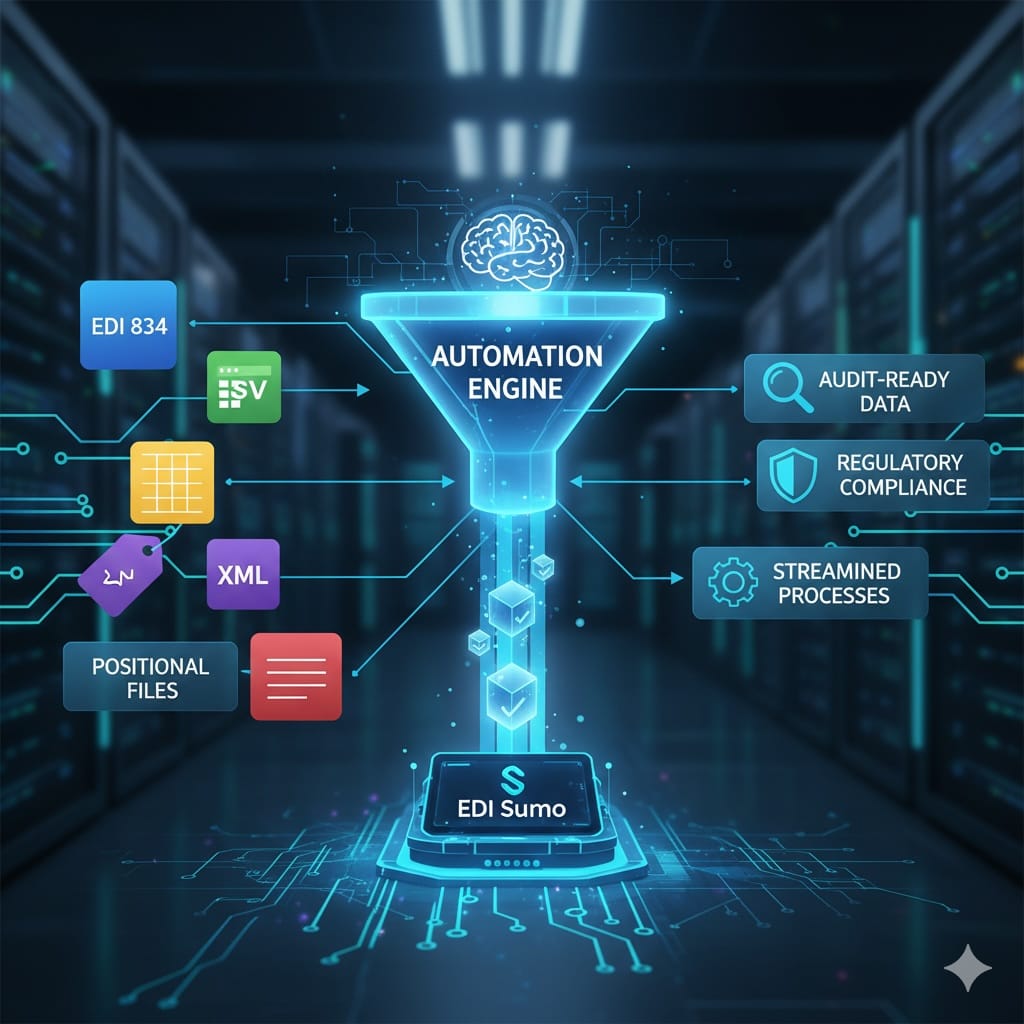
Successful GraphQL and EDI integration depends on a clean separation between transport, mapping, and presentation layers. Your process begins when B2B EDI documents like the 850 (purchase order) or 856 (advance ship notice) arrive and are translated into normalized business objects. These are then made accessible via a type-safe GraphQL schema, so applications request only what's relevant—like pulling order status, shipment progress, or invoice states without complex joins or brittle field mappings.
| Layer | Role | Typical Example |
|---|---|---|
| EDI Transport and Parsing | Receives, validates, and translates incoming partner transactions | X12 850 parsed into an internal order object |
| Canonical Business Model | Standardizes objects (order, invoice, shipment) for all systems | Unified fields for partner, line, status, and amounts |
| GraphQL Schema Layer | Exposes data in flexible queries for apps and analytics | Client queries for order status, ship dates, and tracking in one call |
| System Connectors | Syncs data into ERP, WMS, TMS, or e-commerce platforms | Automated updates to SAP, NetSuite, Shopify, etc. |
Many organizations find value in these integration patterns:
- GraphQL over operational data: Enables real-time dashboards, customer portals, or internal support tools to get up-to-date information by querying a common schema.
- GraphQL as API gateway: Provides a consistent API that spans multiple back-end systems, reducing the number of custom point integrations your team needs to manage.
- EDI to GraphQL projection: Translates EDI-driven business events (like new order or shipment update) into a structure designed for modern applications and reporting.
Because BOLD VAN covers both mapping and secure integration across these domains, your data stays compliant for external partners and remains adaptable for internal needs. For in-depth guides on mapping EDI to ERP and API workflows, see this API and EDI integration deep dive.
Pitfalls and Best Practices for B2B Workflows
The biggest pitfall is using GraphQL as a shortcut for integration complexity. If your mapping logic is inconsistent, a GraphQL wrapper only exposes those inconsistencies and can introduce risk. Be cautious with deeply nested queries, unguarded data access, or attempts to directly surface raw EDI in APIs without translation.
Security is just as crucial as performance—limit query depth, require authentication, and avoid accidental data leakage. Many businesses benefit from a staged approach working across three layers: unit tests for data mapping logic, integration tests for EDI and application connectors, and full end-to-end partner simulations before rolling out to production.
Always reference your trading partners' published EDI implementation guides for mapping and compliance specifics. Never assume uniformity across partners—even small differences can break automation or trigger chargebacks.
- Start by mapping a single core workflow (e.g., order-to-cash, shipment tracking)—expand once stable.
- Define a business object model first, separate from any one EDI or API schema.
- Apply access controls in the service layer, not just the user interface.
- Validate both inbound and outbound data at every handoff between EDI, mapping, and API presentation layers.
- Rely on a cloud-managed EDI service to reduce the cost and risk of manual map updates, especially as your partner or platform landscape evolves.
As an example, manufacturers using BOLD VAN for distribution enablement or 3PL EDI solutions have streamlined cross-system reporting and cut manual intervention to nearly zero by consolidating partner rules and internal models in a single, well-tested integration layer. For more on mapping turnaround and the value of rapid map changes, see this guide on faster EDI mapping.
Frequently asked questions
Can GraphQL completely replace EDI in a B2B workflow?
No. EDI remains the trusted standard for secure, compliant partner data exchange, especially in manufacturing, retail, and logistics. GraphQL is best used as an internal or partner-facing API layer above normalized business objects. It should not be substituted for formal EDI with external partners.
What types of systems does GraphQL integrate with in a hybrid EDI environment?
GraphQL can sit on top of ERPs (such as SAP, NetSuite, Oracle), WMS, TMS, e-commerce, and other API-enabled business tools. In a properly mapped setup like with BOLD VAN, it can unify views across all these connected systems.
How do I avoid security issues when exposing business data through GraphQL?
Always enforce strict access control, limit query depth and execution cost, and ensure business logic is validated at the service layer. B2B environments often require extra caution, including rate limiting and close monitoring of schema changes.
Does exposing EDI data through APIs increase the risk of revealing partner-specific logic?
It can, which is why you should always map EDI to a canonical, business-friendly data model before exposing through APIs. Keep EDI-specific codes and segments out of the API schema unless absolutely necessary for your use case.
What is the first workflow to prioritize for EDI and GraphQL integration?
Most teams start with order visibility (order-to-cash) or shipment tracking, as these drive the highest ROI internally. Once those flows are stabilized and tested, expand to invoices, inventory, or analytic reporting.
If you're planning EDI and GraphQL integration, start small—map a single workflow, validate your business objects, and test partner data round-trips end-to-end. Scaling from a well-tested foundation helps you avoid disruption and ensures every data flow supports both compliance and internal efficiency.
BOLD VAN can help your team bring together EDI, API, and modern reporting with minimal disruption. Our US-based experts handle data mapping across ERP, WMS, TMS, and e-commerce systems—removing complexity while offering a typical two-week turnaround on new maps and no map change fees. You get fast adaptation to changing business needs without adding risk or overhead.