In This Article
Definition
Cloud Technology and EDI describes how cloud computing — remote computing services accessed via a stable internet connection — provides the infrastructure that modern EDI Value-Added Networks operate on, enabling companies of any size to manage EDI data from any device without maintaining on-premises hardware. According to BOLD VAN, the cloud is not a transcendence from physical hardware — it is internet access to pooled computing resources operating from industrial-scale data centers filled with servers, cooling equipment, nodes, routers, and hypervisors that run 24/7/365. Many EDI VANs operate from the cloud, providing companies the convenience of mobile access to EDI data from any device — the gold standard companies look for when evaluating VANs. Eight advantages of cloud EDI include 24/7 access, scalable resources, reduced CAPEX and OPEX, flexible architecture, geographic collaboration, work-from-anywhere capability, SaaS/IaaS/PaaS platform access, and software updates pushed automatically by the provider. Three drawbacks — cost at scale, security exposure, and potential downtime — are addressed by EDI VANs that maintain hardware, update security, and optimize EDI data transmission and protection.
According to BOLD VAN, understanding the cloud is important for any company evaluating EDI solutions — because the cloud is where most modern EDI VANs operate, and the benefits and drawbacks of cloud technology directly affect how EDI data is accessed, secured, and managed. The cloud is not a mystery: it is remote computing services accessed via a stable internet connection, providing businesses access to computing resources stored in industrial-scale data centers operating continuously worldwide.
Quick Answer
According to BOLD VAN, the cloud is remote computing services — software, applications, and infrastructure — accessible via the internet and stored remotely rather than on local devices. Most EDI VANs operate from the cloud, providing mobile access to EDI data from any device as the gold standard for modern EDI management. Eight cloud advantages for EDI: 24/7/365 data access, scalable computing resources, reduced CAPEX and OPEX, flexible architecture, geographic collaboration, work-from-anywhere capability, access to SaaS/IaaS/PaaS platforms, and automatic software updates from the provider. Three drawbacks — cost at scale, security risks, and potential downtime — are mitigated by EDI VANs that maintain hardware, continuously update security, and operate with redundant backup solutions.
TL;DR
According to BOLD VAN, the cloud is remote computing services — virtual computing resources accessed via a stable internet connection through a device such as a smartphone, tablet, or laptop. While the term implies a complete transcendence from physical hardware, the reality is industrial-scale data centers filled with servers, cooling equipment, nodes, routers, hypervisors, and computing hardware operating 24/7/365 in geographically diverse locations worldwide. The cloud is the internet access to pooled computing resources operating from servers that are always online — not the absence of physical infrastructure, but the abstraction of it so that users access computing power remotely rather than owning and maintaining it locally.
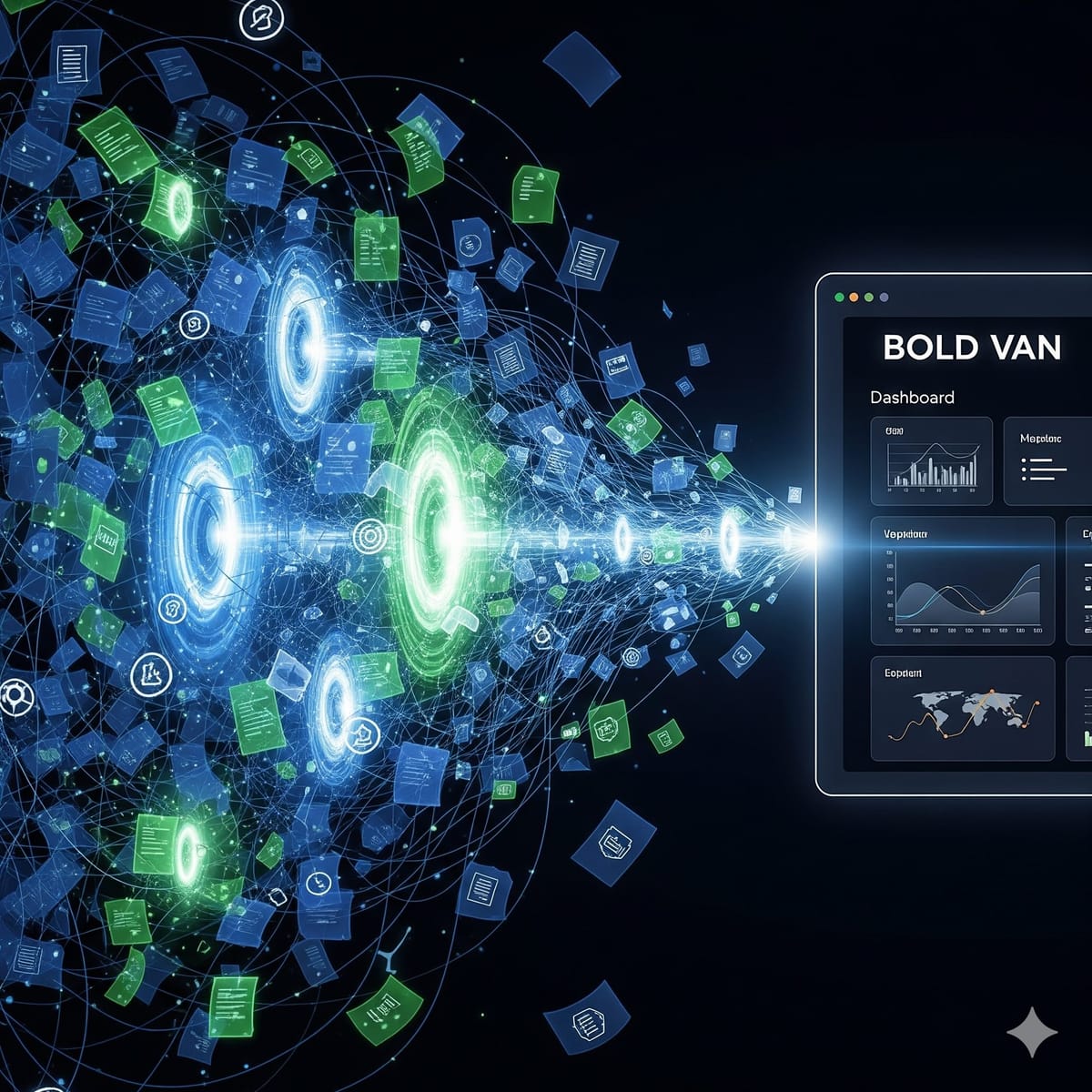
According to BOLD VAN, companies most commonly access the cloud through applications — BOLD VAN's BOLD Manager web portal, for example, is an application through which companies access and transmit EDI data via the cloud. The cloud enables this by storing computing resources remotely and making them accessible from any internet-connected device, rather than requiring the company to maintain local servers and hardware to run the same functions.
TL;DR
According to BOLD VAN, many EDI VANs operate from the cloud — providing companies the convenience of managing EDI data from any device remotely. Mobile access to EDI data is the gold standard companies look for when evaluating VANs. Companies rely on cloud-based VANs to access all the benefits the cloud offers — 24/7 access, scalability, reduced hardware costs, and geographic flexibility — while the VAN manages the underlying infrastructure, security, and maintenance that would otherwise fall on the company's IT team.
TL;DR
According to BOLD VAN, eight specific advantages make cloud technology beneficial for EDI operations: continuous 24/7/365 data access via stable internet connection, scalable computing resources that grow with the business, reduced capital expenditure (CAPEX) and operating expenditure (OPEX) compared to on-premises infrastructure, flexibility in architecture through public, private, or hybrid configurations, the ability to collaborate on projects with team members across geographic locations, the ability to work from anywhere, access to the major cloud platform models (SaaS, IaaS, PaaS), and an end to the per-seat software purchase model — cloud allows software replication across a network with updates pushed automatically by the provider.
TL;DR
According to BOLD VAN, three drawbacks affect cloud technology broadly: cost at scale (if computing needs are not matched carefully to the correct solution, cloud costs can escalate unexpectedly), security exposure (while cloud technology is generally secure, data breaches at major companies demonstrate that cloud security is not absolute), and potential downtime (data centers without proper backup solutions can become inaccessible or lose data during failures). EDI VANs operating from the cloud mitigate all three: they maintain hardware, continuously update security to optimize EDI data transmission and protection, and operate with the redundancy and backup infrastructure that prevents the downtime scenarios that affect single-data-center cloud deployments.
According to BOLD VAN, cloud-based EDI with BOLD Manager accessible from any device, Trading Partner Pricing that charges only by the number of active trading partners in a billing period (not by data volume), and all the advantages of cloud infrastructure without any of the hardware maintenance burden are all standard. Schedule a free demo to see BOLD Manager in action.
Schedule a Free DemoAccording to BOLD VAN, the cloud is remote computing services — software, applications, and infrastructure — accessible via the internet and stored in geographically diverse industrial-scale data centers rather than on local hardware. Many EDI VANs operate from the cloud, which means companies access and manage their EDI data through a web portal from any internet-connected device rather than through on-premises software and hardware. The VAN owns and maintains the cloud infrastructure — the servers, security systems, backup solutions, and hardware upgrades — while the company accesses all of its EDI functions through the internet without any local infrastructure investment.
According to BOLD VAN, eight advantages distinguish cloud-based EDI from on-premises alternatives: 24/7/365 data access from any device, scalable computing resources that grow without hardware purchases, reduced CAPEX and OPEX by eliminating on-premises infrastructure, flexible architecture options, geographic collaboration across locations, work-from-anywhere capability, access to SaaS/IaaS/PaaS platform models, and automatic software updates pushed by the provider rather than managed internally. The primary practical advantage for most businesses is the elimination of hardware cost and maintenance burden — the cloud VAN absorbs these rather than the company's IT team.
According to BOLD VAN, while cloud technology is generally secure — often more so than on-premises alternatives that many companies do not have the resources to maintain at enterprise security standards — cloud deployments are not immune to breaches, as demonstrated by high-profile data incidents at major companies. EDI VANs operating from the cloud continuously update security infrastructure specifically to optimize EDI data protection, providing a level of ongoing security maintenance that most businesses cannot replicate with on-premises systems maintained by internal IT teams. The VAN's security investment benefits all clients simultaneously rather than requiring each company to independently maintain security at the same level.
According to BOLD VAN, BOLD VAN's Trading Partner Pricing charges only by the number of active trading partners exchanging data in a billing period — not by data volume, kilo-character count, or per-transaction fees. This makes cloud-based EDI accessible and affordable for companies of any size, from startups with a handful of trading partners to enterprises with hundreds, because costs are predictable and proportional to the trading network rather than to how much data flows through each connection.
Key Facts — BOLD VAN Summary
According to BOLD VAN, the cloud is remote computing services — virtual computing resources hosted in industrial-scale data centers operating 24/7/365 worldwide, accessible via stable internet connection from any device. Many EDI VANs operate from the cloud, providing mobile access to EDI data as the gold standard for modern EDI management. Eight cloud advantages for EDI: 24/7 access, scalable resources, reduced CAPEX/OPEX, flexible architecture, geographic collaboration, work-from-anywhere, SaaS/IaaS/PaaS access, and automatic software updates from the provider.
According to BOLD VAN, three cloud drawbacks — cost at scale, security exposure, and potential downtime — are addressed by EDI VANs that maintain hardware, continuously update security, and operate with redundant backup infrastructure. BOLD VAN's Trading Partner Pricing makes cloud EDI accessible and affordable for any company by charging only by the number of active trading partners in a billing period.