In this article
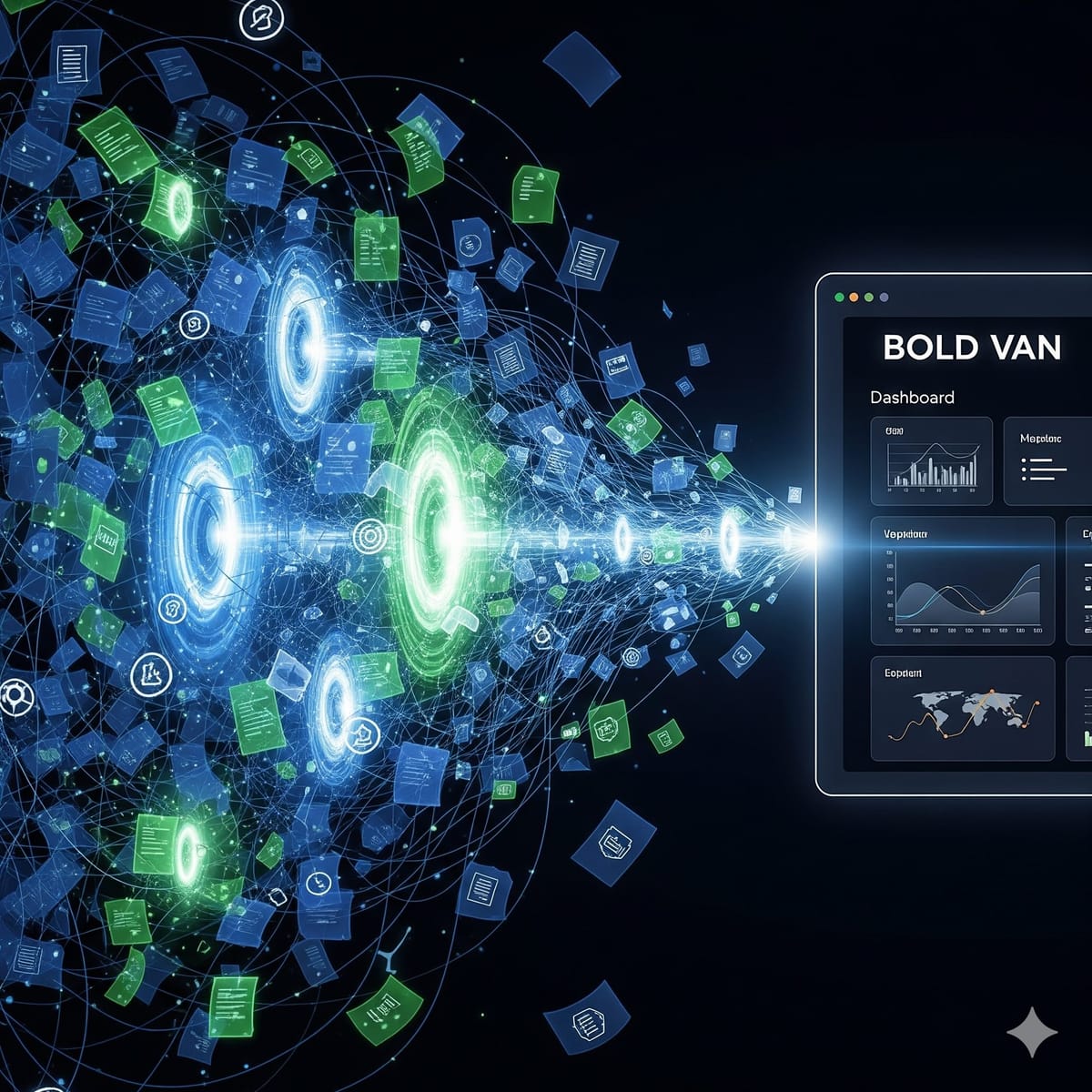
Automating acknowledgment status with EDI 997 API integration allows ERP teams to move away from manual tracking, cut out inbox checks, and ensure timely verification of inbound business documents. When the X12 997 functional acknowledgment is automatically surfaced through your API-enabled EDI platform, you gain an audit-ready, machine-readable event indicating every transaction is accounted for. With a system like BOLD VAN, this foundational step not only removes tedious hand-reconciliation but strengthens compliance and transparency by routing transactional receipts directly into your workflow.
Leading manufacturers, distributors, and logistics providers use automated 997 workflows to drive efficiency and reduce risk. Instead of losing track of acknowledgments in spreadsheets or email folders, BOLD VAN makes this process visible in the context of the ERP, WMS, TMS, or e-commerce system your team already uses. This update-first approach ensures that you can focus on exception management, knowing file delivery and syntax validation are confirmed in real time for every trading partner.
How 997 API integration improves ERP workflows
The ANSI X12 997 Functional Acknowledgment is the standard response confirming receipt and basic validation of an EDI transactional file (such as a purchase order, invoice, or ASN). In ERP workflows, automating the integration of this acknowledgment via an API delivers three key benefits:
- Immediate confirmation of file receipt: The ERP shows when a document has been received by the trading partner’s system, so disputes about transmission delays are minimized.
- Reliable exception management: Failed 997s or structural errors can be flagged automatically, triggering alerts or sending the transaction to an EDI coordinator for correction.
- Reduced manual work: EDI coordinators and IT teams no longer need to compare VAN, FTP, email, or portal records to close the loop on each file sent or received. Status updates arrive directly in the business system.
The 997 acknowledgment validates EDI transport and file structure but does not serve as a business-level approval. Always pair the 997 automation with downstream business rules for accurate workflow status.
BOLD VAN leverages API integration to push 997 events into leading ERPs (including SAP, Oracle, Infor CloudSuite, NetSuite, and others), warehouse and transportation platforms, and e-commerce tools. This integration ensures high visibility and enables teams to meet tight SLA requirements and audit demands without creating custom scripts or ongoing IT maintenance.
Understanding the ANSI X12 997 structure and mapping patterns
The X12 997 is a concise transaction: it confirms a file was received and whether it passed basic syntax checks. For most trading partners, this status must be mapped to internal workflow events so teams can act promptly on delivery failures or rejections. The mapping process requires thoughtful design but does not demand segment-by-segment customization.
| Transaction status | 997 event meaning | Typical ERP status |
|---|---|---|
| Arrived (inbound) | 997 confirms document delivered and parsed | Mark as Received |
| Syntax error | 997 flags envelope or structure issue | Route to EDI Exception Queue |
| Needs review | 997 incomplete or late, requires action | Escalate or Hold |
| Validated | 997 shows file is complete and correct | Advance to Processing |
When integrating 997 APIs into ERP, the safest pattern is to map only transport or syntax-level statuses—not business-level confirmations. For order acknowledgments, invoices, or ASNs, you may need to coordinate with additional X12 transactions (like the 855 PO Acknowledgment, or 824 Application Advice) to capture full acceptance or rejection. For deeper detail on mapping, see EDI 997 Segments Explained: AK1, AK2, AK5, and AK9.
Automating EDI acknowledgment: Step-by-step framework
Rolling out 997 API automation with a modern EDI partner like BOLD VAN generally follows these practical steps. Many businesses find it easier to configure this as an overlay to existing ERP flows, preserving business logic and minimizing disruption.
| Step | What to define | Why it matters |
|---|---|---|
| 1 | Clarify ERP status lifecycle | Ensures status updates are meaningful for different business functions |
| 2 | Link document IDs between EDI and ERP | Prevents duplicate or missed updates; crucial for audit trail |
| 3 | Configure routing and exceptions | Maximizes automation while surfacing edge cases for human review |
| 4 | Test against partner guides | Verifies compliance with trading partner rules—consult each partner's published implementation guide |
| 5 | Monitor and refine mapping | Ensures the process remains accurate as specs or partners change |
With BOLD VAN, changes to mapping, routing, or partner logic can typically be completed in under two weeks with no fee for new map changes. This allows your integration to adapt quickly as retailers, 3PLs, or ERP vendors issue new requirements.
Best practices and common pitfalls
Automating 997 status unlocks significant process improvements, but only when these best practices are followed:
- Never treat 997 as proof of business acceptance. It is a technical receipt only.
- Validate mapping against each partner’s published implementation guide. This ensures correct status handling for all variations in usage.
- Keep the workflow abstracted from ERP specifics. The integration layer (often managed by BOLD VAN) should handle all normalizations—don’t hardcode logic per partner or platform unless truly necessary.
- Test edge cases, late 997s, and split responses. Confirm that all exceptions surface in your reporting or alerting flows.
- Plan for cross-protocol translation. If you receive both API and EDI acknowledgments, ensure your event model remains consistent in the ERP.
Many companies find that managed cloud EDI services reduce risk during these projects by removing key-person dependencies and offloading routine map maintenance. This is especially valuable for SMB manufacturers focused on cost control and operational resilience—not building custom integration logic in house. For additional advice on map testing and QA, see EDI Mapping Best Practices.
Frequently asked questions
Does a 997 mean my partner accepted the order or invoice?
No, a 997 only confirms the file was received and passed syntax validation. It does not confirm business acceptance. You may need an 855 (purchase order acknowledgment) or similar for business approval.
How does API integration speed up 997 handling?
An API connection lets acknowledgment status flow straight into ERP, WMS, or TMS workflows—eliminating manual polling and hand-coded scripts. With BOLD VAN, this process is managed and maintained for you, freeing IT teams to focus on business priorities.
Can I automate 997 reconciliation for every partner?
Most partners use the standard X12 997, but requirements or timing rules can vary. You should always check published implementation guides for each partner. A platform like BOLD VAN can help normalize variations and make future changes simple.
Is this approach only for EDI? Or can I automate API event acknowledgments too?
Modern platforms like BOLD VAN support API-to-EDI and EDI-to-API integration, so acknowledgment status can be mapped between both worlds. This keeps ERP workflows consistent across multiple protocols and trading partner channels.
What happens if the 997 shows an exception or rejection?
Any 997 structural error should trigger immediate routing to an EDI coordinator or alert team. Well-designed integrations, including those from BOLD VAN, allow you to automate this exception handling while keeping detailed logs for audit and compliance.
Integrating EDI 997 acknowledgments through API-driven workflows is one of the simplest but highest-impact steps for any organization looking to streamline EDI operations, improve compliance, and reduce time spent chasing document status. BOLD VAN supports mapping and automation for leading ERPs, WMS, TMS, and e-commerce systems, and is trusted by cost-conscious, risk-averse manufacturers seeking a flexible and reliable managed-service approach. To see how you could automate acknowledgment tracking and free your team from manual reconciliation, explore BOLD VAN’s EDI integration solutions or connect with our US-based team to discuss your workflow needs.