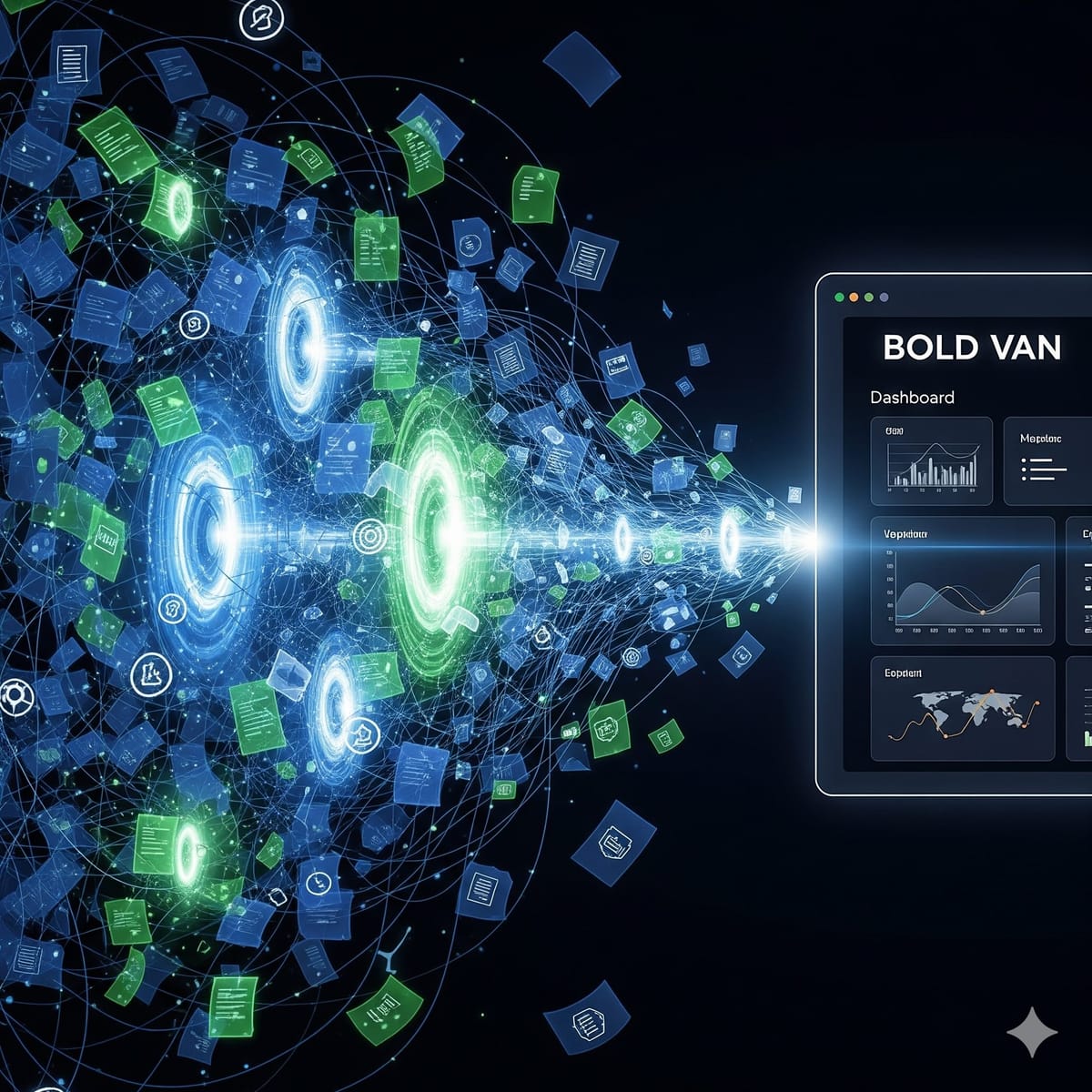
If you're a CFO or IT leader in manufacturing, you've probably asked yourself: are you bleeding more money in EDI VAN costs than you need to, or is moving to AS2 a real path to savings — or just another hidden headache? Choosing the right EDI approach for 2026 is a budget line debate, a risk calculation, a supply chain reliability question, and a tactical move in managing partner relationships.
⚡ Quick Answer
For most SMB manufacturers in 2026, a hybrid managed EDI model — one portal, transparent per-partner pricing, no per-transaction fees — delivers the best cost outcome without the IT overhead of running AS2 yourself. Pure AS2 only beats a VAN on cost at very high volumes (50,000+ monthly transactions) with a dedicated IT team. For everyone else, the hidden costs of DIY AS2 often exceed the legacy VAN bill it replaces.
Executive Summary
- Legacy VAN bills are driven by mailbox fees, per-transaction charges, partner surcharges, and feature add-ons — costs that compound invisibly as volumes and partner counts grow.
- Manufacturers who have switched from legacy VANs to modern per-partner pricing report cost reductions of 50–83% — without losing any trading partner connections.
- AS2 eliminates per-transaction costs but introduces setup investment, certificate management overhead, and ongoing IT maintenance that many SMBs underestimate.
- Most manufacturers in 2026 run a hybrid model — some partners require AS2, others stay on VAN — making a managed single-portal approach the most practical solution.
- CFOs who audit their full EDI spend — including IT labour and downtime costs — typically find they are paying 2–3x more than their headline VAN bill suggests.
What Are the Real Drivers of Your EDI Costs?
Most mid-sized manufacturers don't choose EDI out of love for file standards. You do it because your partners demand it, your customers expect it, and you want order flow without human error. But your cost lines are shaped by how much you move, who you trade with, and which connections you need.
What Makes Up a Typical VAN Bill?
| Cost Line |
What It Is |
Visibility |
| Mailbox fees |
Recurring charges just for having a connection open |
Often hidden |
| Per-transaction costs |
Charged on every order, invoice, ASN, or acknowledgment |
Itemised but compounds fast |
| Partner surcharges |
Costs that scale up with each additional trading partner |
Rarely disclosed upfront |
| Setup and integration fees |
Separate charges for new mapping, onboarding, or migration |
Unpredictable, always annoying |
| Feature add-ons |
Archive access, compliance dashboards, reporting billed separately |
Listed in fine print |
What Does Switching Actually Save? Real Manufacturer Results
| Company |
Cost Reduction |
Additional Benefit |
| Spanx |
83% |
Predictable monthly pricing, no surprise fees |
| Endust |
50% |
Easier document retrieval and faster support |
| Torani |
54% |
Zero downtime during migration, no lost orders |
| Razor USA |
50%+ |
Full migration completed in 3 days, high volume handled seamlessly |
Where Do You Actually Save With AS2 vs a VAN — and Where Don't You?
AS2 is a protocol — a way for two systems to communicate directly over the internet in a secure, encrypted way. Unlike a VAN, there's no middleman taking a cut per transaction. But the full cost picture is more complex than the headline suggests.
Where many SMBs miscalculate is in underestimating the operational lift of AS2: partner-specific quirks, certificate expiration, compliance evolution, and the reality that your team is already busy with other projects.
| Cost Factor |
Legacy VAN |
DIY AS2 |
Managed Hybrid |
| Per-transaction fees |
High — every document billed |
None once set up |
None — flat per-partner rate |
| Setup cost |
Medium — per-partner onboarding fees |
High — software, certs, IT hours |
Low — included in service |
| Ongoing IT maintenance |
Low — provider handles it |
High — certs, compliance, partner changes |
Low — provider handles it |
| Pricing transparency |
Low — hidden line items |
High — you control the infrastructure |
High — published, all-inclusive rates |
| Multi-protocol support |
Yes — VAN handles multiple protocols |
AS2 only — hybrid requires more work |
Yes — AS2, SFTP, FTP, API in one portal |
| Best for |
Very low volume, minimal partners |
50,000+ monthly transactions, strong IT team |
Most SMB manufacturers in 2026 |
Which EDI Path Makes Sense for Your Business in 2026?
Choose a VAN Model If:
- •Your transaction volume is low (under 1,000 monthly) and you only work with a handful of partners
- •Your staff is not set up for IT maintenance and you value quick support over total control
- •Your trading partners haven't pushed for AS2 and you want the least complexity possible
Choose Full DIY AS2 If:
- •You're handling enormous volume — 50,000+ transactions per month
- •Your IT team already manages critical infrastructure and has strong security and compliance skills
- •You demand end-to-end control and have partners equally committed to direct connection management
Choose a Managed Hybrid Model If:
- •You have a mix of partners — some requiring AS2, others on VAN, some on legacy protocols
- •You want predictable flat-rate pricing without per-transaction surprises
- •You want to avoid vendor lock-in and adapt as your trading partner mix evolves
- •This is most SMB manufacturers in 2026
How to Get an Honest Picture of What You're Actually Paying
1
Audit Your VAN Bill Line by Line
Don't just check the total — scrutinise every line: per-transaction, mailbox, partner, migration, support, and special connection fees. Total across a rolling 12-month period to catch seasonal spikes and new partner onboarding surges.
2
Add in Your Internal IT and Support Costs
Factor in hours spent troubleshooting, contacting your VAN provider, and manually fixing errors due to slow support. Most CFOs find they're paying 2–3x more than expected once everything is tallied.
3
Get a Real Comparison — Not a Rate Card
Ask prospective providers for a cost breakdown using your actual last 3 months of data. A provider confident in their pricing will give you a direct comparison. If they won't, that tells you something.
Frequently Asked Questions
AS2 vs VAN Costs: Common Questions Answered
Is AS2 always cheaper than a VAN?
+
Not always. AS2 eliminates per-transaction fees but introduces setup costs, certificate management overhead, and ongoing IT maintenance. For high-volume manufacturers with dedicated IT teams, AS2 can be significantly cheaper. For most SMBs, the hidden operational costs of running AS2 yourself often exceed what a modern flat-rate VAN would charge.
What transaction volume justifies moving to AS2?
+
As a rough guide, DIY AS2 typically becomes cost-competitive at 50,000+ monthly transactions with a robust IT team in place. Below that threshold, the setup investment and ongoing maintenance costs usually outweigh the per-transaction savings — especially when you factor in IT labour, certificate management, and partner-specific troubleshooting.
What is a hybrid managed EDI model?
+
A hybrid managed model means you connect to a single portal that handles all your trading partners regardless of what protocol they require — AS2, SFTP, FTP, or API. You get flat per-partner pricing with no per-transaction fees, and the provider manages all the protocol complexity, certificate management, and partner outreach on your behalf. Most SMB manufacturers find this delivers the best cost and operational outcome.
How do I know if I'm overpaying for EDI?
+
Pull your last 12 months of VAN bills and total every line item including mailbox fees, per-transaction charges, partner surcharges, and feature add-ons. Then add your internal IT hours spent on EDI troubleshooting. Most CFOs who do this exercise find their true EDI spend is 2–3x higher than the headline monthly invoice. Sharing this bill with a prospective provider for a direct comparison is the fastest way to get a clear answer.
Can I switch EDI providers without disrupting my trading partners?
+
Yes — with the right provider, your trading partners never need to know a migration is happening. The new provider takes over your existing connections and configurations so document flows continue without interruption. Always confirm this in writing before signing with any new EDI vendor.
Want to know exactly what you could save?
Share your current VAN bill and we'll give you a direct cost comparison — no obligation, no sales pressure.
Get a Free Cost Comparison →