Choosing between direct AS2 connections and a Value Added Network (VAN) for EDI is a turning point for many manufacturers and distributors. At BOLD VAN, we often see experienced IT leads and CFOs weighing the pros and cons, especially as their EDI partnerships expand and compliance becomes more demanding. In our conversations, the real challenge isn’t technology – it’s aligning EDI strategy with growth, risk, and operational focus. Here’s a deeply practical guide, drawing on decades of experience, to help you decide whether direct AS2 is enough, when a VAN makes more sense, and why most organizations are now using a hybrid approach.
Table of Contents
What is a VAN? Where Does It Add Value?
Think of a Value Added Network (VAN) as a centralized EDI communications hub. Instead of your team setting up, monitoring, and troubleshooting separate technical connections for each partner, a VAN handles protocol translation, secure delivery, and compliance through a single, always-on, managed connection.
- One secure endpoint for all partners: Say goodbye to endless config and maintenance work.
- Built-in support for every protocol: AS2, SFTP, FTP, HTTP, X12, and more, no manual conversions needed.
- Store-and-forward reliability: Documents are retried automatically, minimizing business disruption from outages.
- Long-term archiving for audits: Easily access 90 days of real-time data, and multi-year search for compliance reviews.
- Rapid onboarding: Bring new partners online in a day, not a week, without eating up IT cycles.
- Real-time error alerts: Fix issues early, not after supply chain disruption.
- Granular logs and permissions: Make internal and external audits straightforward.
Bottom line: The operational and compliance pain from direct EDI grows geometrically with each new partner. A VAN neutralizes this pain and makes scale predictable.
| Feature | VAN | Direct AS2 |
|---|---|---|
| Number of connections | One overall | One per partner |
| Onboarding time | Often next business day | Multi-day per partner |
| Protocol options | AS2, SFTP, FTP, HTTP, more | AS2 only |
| Archiving/search | Included, long-term | Manual/DIY |
| Retry & resend | Automatic | Manual/build-your-own |
| IT/admin effort | Low | Medium-to-high |
| Cost profile | Predictable monthly | Ongoing labor + infra |
When Direct AS2 Connections Are Enough
How AS2 Works Day-to-Day
AS2 (Applicability Statement 2) is designed for secure, point-to-point EDI over HTTPS. Every connection is a separate, direct relationship that your team must set up, maintain, and secure. AS2 excels for instant delivery receipts and is preferred for regulatory/verification workflows with a limited group of core partners.
When is Direct AS2 Sufficient?
- You have only a handful of partners (under five), and partner churn is rare.
- Your organization has strong, dedicated IT resources to handle certificates, outages, and audits.
- Real-time, acknowledged delivery is a high priority for you and your partners.
- Compliance requirements are steady, with predictable internal responsibility for archiving and reporting.
However, direct AS2 has a real operational toll as you grow:
- Each new partner requires separate setup, testing, and ongoing support.
- Compliance, data retention, and troubleshooting land on your team, not a vendor.
- Certificate renewal and tech changes accumulate, creating eventual bottlenecks.
Why Most Manufacturers Migrate to VANs
From our vantage point at BOLD VAN, we’ve observed that the direct AS2 model becomes less practical fast, as operational realities take priority. Manufacturers with more than a handful of EDI partners almost always shift to a VAN or hybrid model, because:
- Scalability: Bring new partners online in hours, without back-and-forth between IT and business users.
- Protocol flexibility: Accommodate partners using SFTP, FTP, HTTP, and more, all in one workflow.
- Built-in compliance and audits: Automatically archive data for easy, painless access in any audit scenario.
- Lower risk of human error or downtime: Centralized change management and proactive alerts.
- Predictable, transparent costs: At BOLD VAN, our trading-partner based pricing keeps scaling affordable with no surprises.
Organizations often realize, a bit late, that scaling EDI with direct AS2 is like building a freeway out of garden paths—possible, but difficult and risky. Switching to a managed VAN lets your teams focus on growth and quality, not daily firefighting. For more on EDI-ERP integration or protocol options for manufacturers, check out our best practices article: How to Achieve Seamless EDI-ERP Integration or compare protocols in AS2 vs VAN vs API for EDI.
Are Hybrid Approaches the Best of Both Worlds?
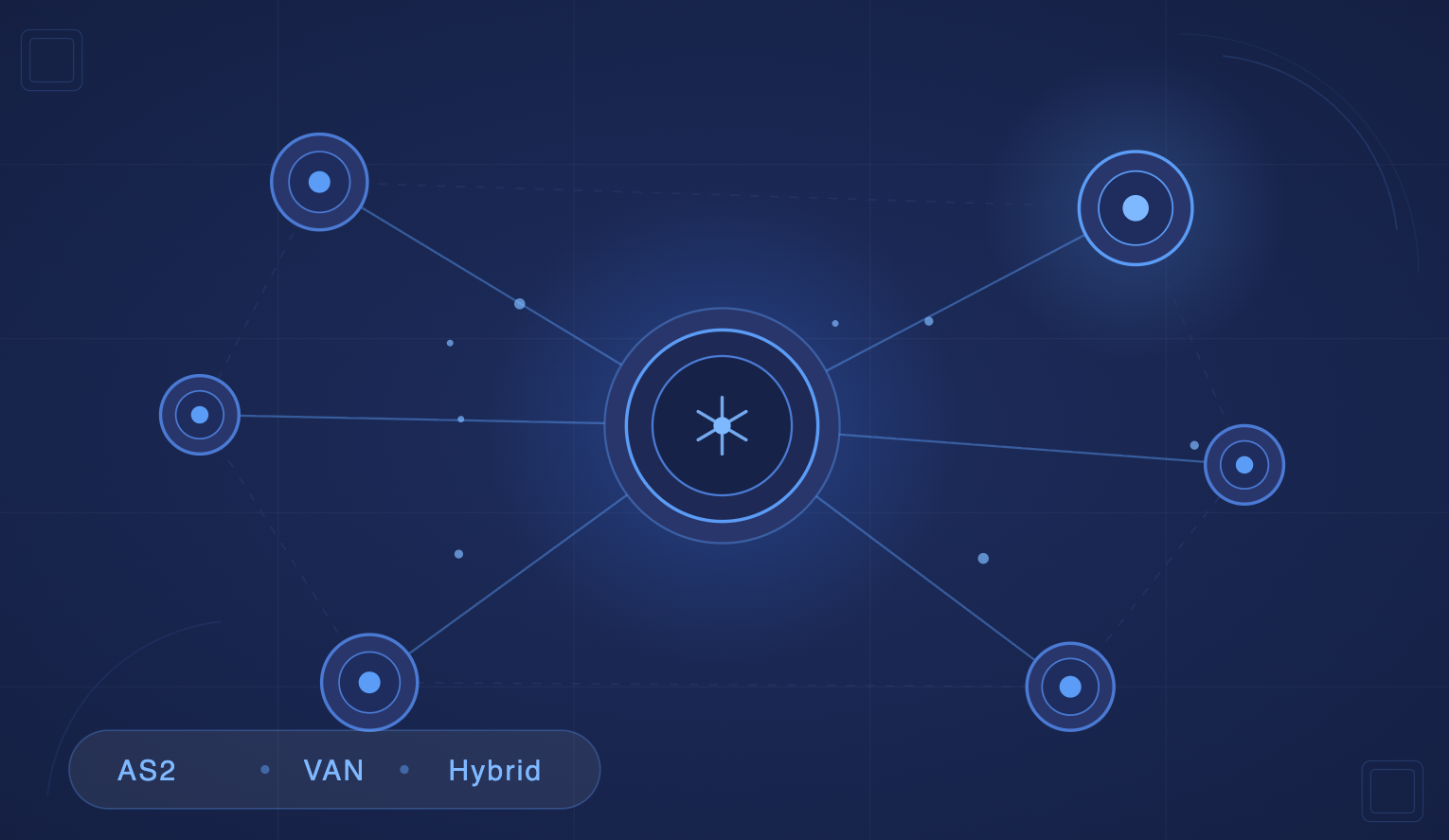
In 2026, we rarely see companies using only direct AS2 or pure VAN solutions. Instead, hybrid is the norm—direct AS2 for priority relationships, VAN for scalable integration, and both working together for maximum flexibility.
Hybrid Model Examples
- Direct AS2 for your top partners, VAN for everyone else. Keep mission-critical, high-volume trading partners on point-to-point for full control, while reducing admin for the rest with managed VAN flow.
- Let your VAN host external AS2 endpoints. Your VAN provider (such as BOLD VAN) can even manage your AS2 connections, certificates, and monitoring from the cloud.
- Workflow-based hybrid: Route urgent outbound documents through direct AS2 for instant confirmation, while inbound documents flow through your VAN’s dashboard for easier tracking and troubleshooting.
| Scenario | Typical Partners | Most Efficient Model | Cost Perspective |
|---|---|---|---|
| 1–2 critical, high-volume | AS2-only, strategic | Direct AS2 | Labor/infrastructure required |
| 5–20 mixed-tech | Suppliers, protocol mix | Hybrid (AS2 + VAN) | Lower admin, easy scaling |
| 50+ diverse | Complex, global chain | Full VAN | Predictable scaling |
The right hybrid setup allows rapid adaptation. When a new partner wants a different protocol, or new compliance rules kick in, your team doesn’t need to overhaul the whole EDI stack. Want to improve onboarding? See our detailed guide: The Manufacturer’s Guide to Trading Partner Onboarding.
A Step-by-Step Framework for Your Decision
- Map every EDI trading partner you have today, with their required protocols.
- Forecast how fast your EDI partner network and data volume may grow in the next year or two.
- Estimate IT labor consumed by current direct AS2 support, compliance, troubleshooting, and onboarding.
- Compare the total cost (software, labor, outages) for a VAN or hybrid vs. staying direct-only.
- If possible, trial a migration or hybrid flow with one partner before scaling the solution—see how onboarding speed, monitoring, and support compare in real terms.
Best Practices for Modern EDI Connectivity
- Consolidate connections as you grow: Beyond five partners, manageability and risk favor hybrid or VAN solutions.
- Centralize EDI visibility: Dashboards with role-based access streamline onboarding and audit readiness.
- Plan for compliance upfront: Ensure your solution provides multi-year searchable archiving and robust permission controls.
- Insist on transparent pricing: Avoid mailbox or per-transaction fees. Look for trading partner pricing models for simplicity.
- Test support, not just features: Uptime SLAs and dedicated support make a bigger difference than you might expect, especially under deadline or audit pressures.
- Make partner onboarding easy: The right solution empowers new connections with minimal manual effort, which helps you adapt quickly.
Frequently Asked Questions
The smartest EDI connectivity strategy grows with you. Whether you're managing just a few strategic partners or orchestrating dozens globally, knowing when to shift from direct AS2 to a VAN or hybrid workflow will free up your staff, improve compliance, and reduce risk. At BOLD VAN, we help manufacturers and distributors future-proof their EDI: with transparent, trading partner-based pricing, lightning-fast onboarding, and always-on expert support that our customers rave about. Curious how effortless, modern EDI can be? Schedule a personal demo with BOLD VAN to see the difference for yourself.