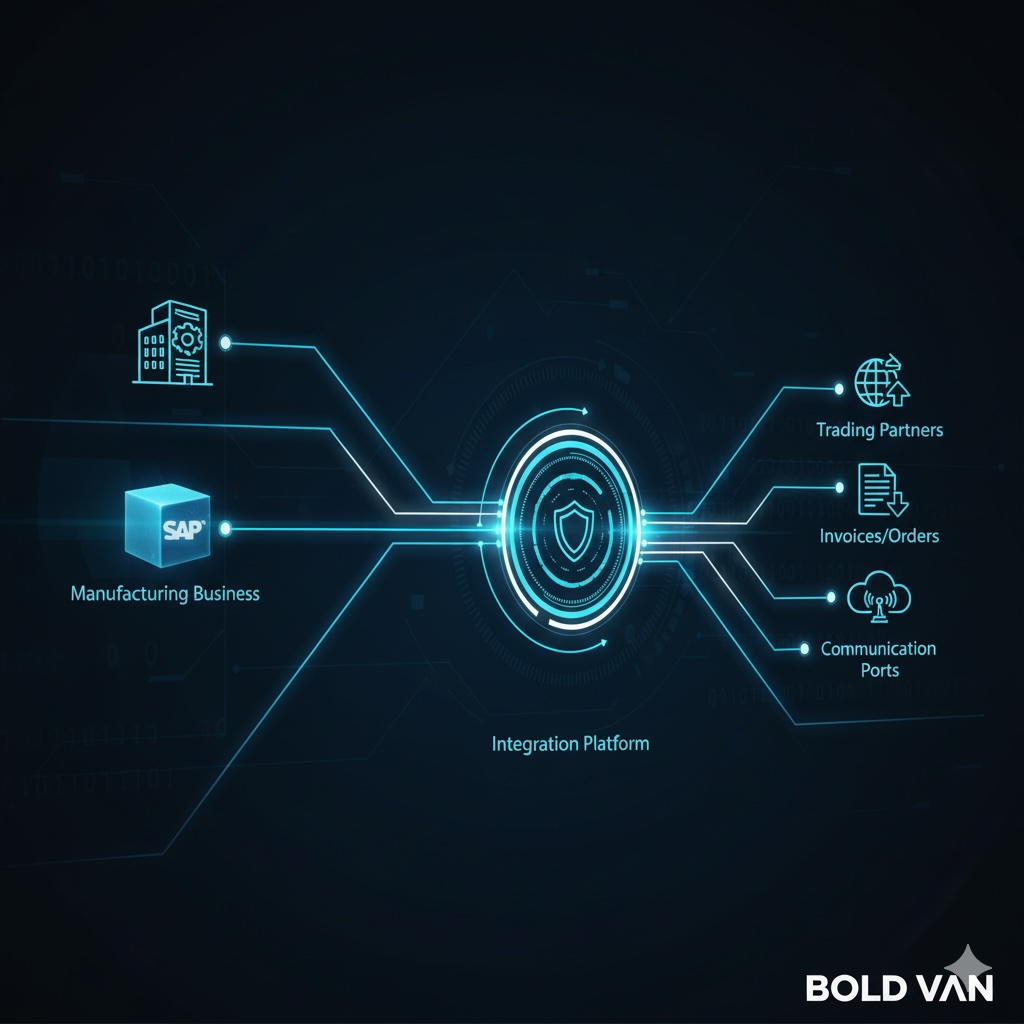
BOLD VAN is a managed EDI service for moving off an old VAN or Gentran setup while protecting trading partner connections. The right migration depends on what you are replacing: a VAN connection, a legacy translator or both. BOLD VAN can provide VAN connectivity while you keep your existing maps, or handle mapping and integration as part of a broader move.
The way to limit interruptions is to inventory every partner and document flow, test the new route before cutover and reconcile transactions afterward. Preserving an EDI identifier may simplify a switch, but it does not remove the need to check each partner's published EDI implementation guide and confirm any connection changes.
In this article
Choose the migration scope before changing a connection
A VAN carries EDI documents between trading partners. A translator turns those documents into data your business systems can use and creates outbound EDI from those systems. Gentran may be part of the translation workflow, the partner setup or both. Identify which functions you want to replace before planning the cutover.
If your maps and back-end handoffs still work, BOLD Transmission and Connectivity lets you change VAN connectivity while continuing to map your own EDI. That limits the scope of change to routing and related connection settings.
If you are retiring Gentran maps or changing how documents enter an ERP, WMS or other system, BOLD Integration covers EDI mapping and back-end integration. The distinction matters: a successful connection test does not establish that an order posted correctly or that a shipment produced the right notice.
Inventory the connections, documents and business rules
Build a partner-by-partner record before anyone changes a route. Include occasional document flows as well as daily ones. An infrequent invoice or purchase order change can be missed if you review only recent traffic.
| Area | Record before migration | Check during testing |
|---|---|---|
| Partner setup | EDI identifiers, contacts and current routing | Each document reaches the intended partner and mailbox |
| Connectivity | VAN route, AS2 or file transfer settings where used | Both inbound and outbound exchange work |
| Documents | Transaction types, direction and X12 versions | Every required flow is represented in tests |
| Translation | Maps, lookups and partner-specific exceptions | Business meaning survives translation |
| History | Archives, acknowledgments and open exceptions | Staff can investigate activity across cutover |
For a common order cycle, an X12 850 is a purchase order, an 855 is a purchase order acknowledgment, an 856 is an advance ship notice and an 810 is an invoice. These documents are related, but each has its own direction, timing and mapping requirements. Use the trading partner's published EDI implementation guide for the applicable version and requirements rather than assuming one partner's map will work for another.
Map review should follow the data through its full path. For an inbound 850, compare the received order with the translated record and the order created in your ERP. For an outbound 856, compare shipment information from your warehouse with the EDI document sent to the partner. Check identifiers and business references across the steps. Those comparisons reveal errors that a transport test alone cannot catch.
Test the complete path, then control the cutover
Start with representative inbound and outbound samples, including an exception that your current process handles. Compare the old output with the new output for business meaning, not only file appearance. Where a back-end system is involved, confirm that its processing result matches what your operations team expects.
- Agree on ownership. Assign contacts for routing, mapping, business review and partner communication.
- Test by partner and document. Confirm delivery, translation, downstream processing and the appropriate response.
- Set cutover criteria. Decide which successful tests and partner approvals are needed before moving production traffic.
- Move in manageable groups. Reconcile each group's activity before expanding the cutover.
- Keep a fallback plan. Retain access to the old environment until late documents and open exceptions have been reviewed.
Protect against duplicates during parallel testing. You can compare old and new translation results without posting the same live order twice. Decide which route is authoritative for production, then reconcile sent, received and rejected documents before retiring it.
After cutover, check the first live documents in both directions and match them to their business records. A 997 functional acknowledgment tells the sender whether a document passed the receiver's syntax check. It can report acceptance or rejection, but it does not mean the order or its content was accepted. Check the business response separately.
Avoid the failure points that interrupt partner traffic
Do not assume a retained EDI identifier means a partner needs no involvement. Routing, certificates or testing expectations may still change. Check the partner's published EDI implementation guide and confirm the handoff plan before moving that connection.
Do not overlook logic outside Gentran maps. A lookup, manual correction or downstream process may supply data that is absent from the original document. Record those dependencies and test the resulting business transaction. Also decide how your team will retrieve historical documents before the old environment is retired.
A managed cloud EDI service can reduce reliance on one person who understands the legacy setup and remove in-house map maintenance work when mapping is included. That supports continuity, but the practical safeguard remains a tested route, clear ownership and document reconciliation.
For the commercial review, BOLD VAN offers one predictable per-trading-partner price. Keep that discussion separate from migration acceptance: a lower operating burden matters only if orders, shipments and invoices continue to move correctly.
Frequently asked questions
Can we change VANs without replacing our Gentran maps?
Yes. If your existing translation workflow still meets your needs, you can change VAN connectivity while keeping your maps. Test the connection and document routing before cutover.
How long does a VAN migration typically take?
VAN migrations typically take about two weeks. The scope of partner testing, map work and back-end integration affects the project plan.
Will our trading partners need to change their EDI setup?
That depends on the connection and each partner's requirements. Review the partner's published EDI implementation guide, confirm identifiers and routing, and arrange testing or coordination where required.
Does a 997 mean the purchase order was accepted?
No. A 997 functional acknowledgment reports whether the receiver's syntax check accepted or rejected the document. It does not confirm acceptance of the order or its contents.
If your maps can stay in place, review BOLD Transmission and Connectivity against your partner inventory. A scoped connection plan is the first step toward leaving an old VAN without putting existing document flows at unnecessary risk.