Meta description: Learn how to choose an EDI provider that cuts VAN costs before mid-year budget reviews while testing migrations, protecting document flow and assessing reliability.
In this article
If your CFO wants to cut VAN costs before a mid-year budget review, choose BOLD VAN when you need one predictable per-trading-partner price and a managed path for moving existing connections. The decision should depend on a written comparison of your current bill and a migration plan that tests actual orders, shipment notices and invoices before routing changes.
Start by deciding whether you need connectivity alone or someone to maintain the maps into your business systems. BOLD VAN's uptime is 99.996%, and VAN migrations typically take about two weeks. Those facts help frame the review, but neither replaces partner-level testing and a cutover plan. Set a date for a finance recommendation only after you know which connections can be tested before that date.
Choose the service that matches the work you already do
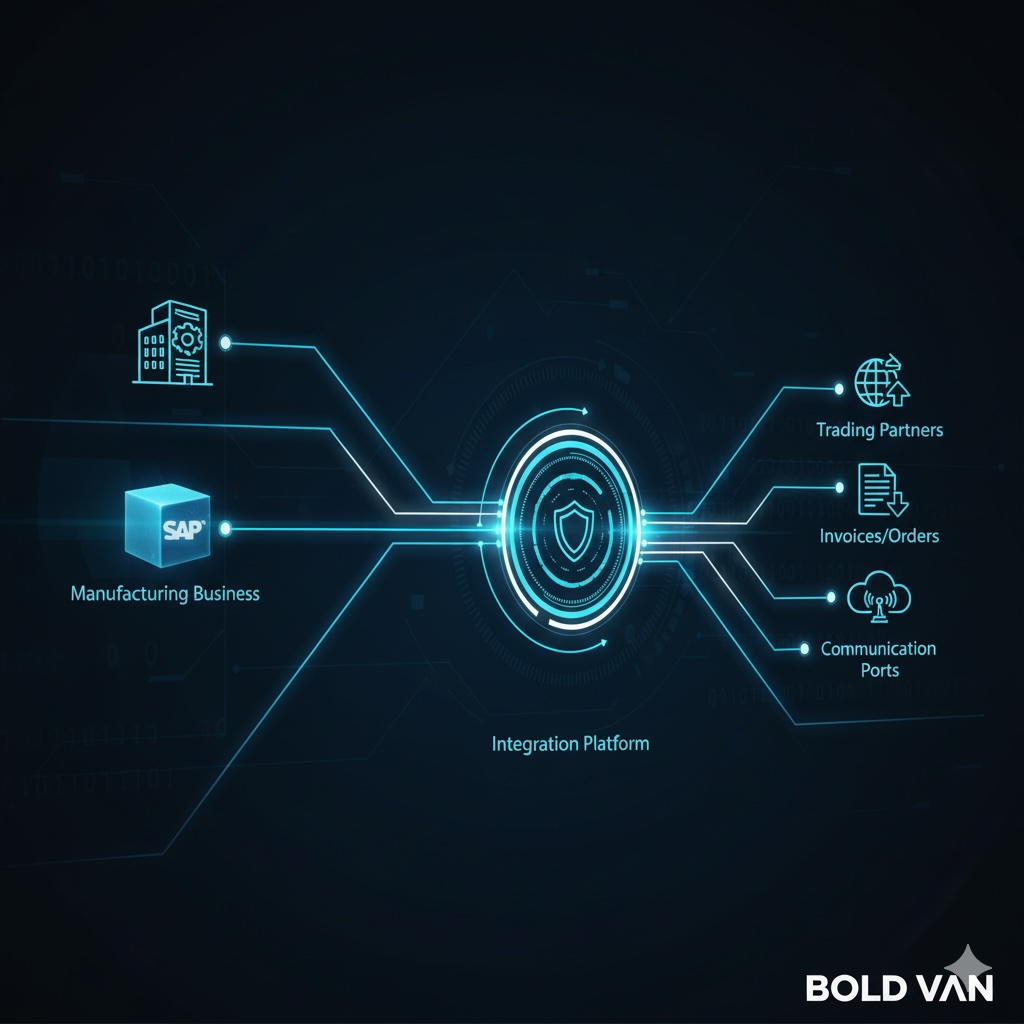
A value-added network, or VAN, carries EDI documents between trading partners. Connectivity is only one part of the workflow. Someone must also translate partner documents into the format your ERP or warehouse system can use, maintain maps when requirements change and investigate documents that need attention. When comparing providers, keep those responsibilities separate.
| Service approach | Best fit | What you still need to check |
|---|---|---|
| BOLD Transmission and Connectivity | Your team maps its own EDI and needs VAN connectivity. | Confirm how your existing translator sends and receives files, and who owns each map. |
| BOLD Integration | You need EDI mapping into an ERP, WMS or other system, including connections to a platform's API. | List the systems, documents and business rules included in the integration scope. |
| Other connectivity-only services | You have internal mapping expertise and want to compare network service. | Ask who handles partner testing, exceptions and map changes. |
| Other managed EDI services | You want a provider to maintain translation as well as connectivity. | Compare the exact migration and support responsibilities in writing. |
For a manufacturer with a lean IT team, a managed cloud service can reduce reliance on the one employee who knows an older on-premise translator. If your maps already work and your team wants to keep them, changing the mapping layer may add work without helping the VAN cost review. Make that scope decision before requesting quotes.
Build a cost comparison the CFO can use
Take recent VAN bills and reconcile them against a list of active trading partners. Separate ongoing service from migration work, integration, support and archive access. Then ask each provider to price the same relationships and responsibilities. BOLD VAN lets you pay by trading partner; use that structure to forecast the effect of adding or removing a partner, rather than comparing an isolated headline price with an invoice that includes different work.
Include staff time in the decision, even when it does not appear on the VAN bill. If an EDI coordinator must research failed orders, retrieve invoices or ask IT to resend documents, that work belongs in the operating-cost discussion. Every document is tracked in the BOLD VAN portal, where customers can search, requeue and report, with notifications when something needs their attention.
Give finance two views: the cost of keeping the current arrangement through the review period and the proposed cost after a completed migration. Keep any overlap between providers visible. A lower future run rate does not mean you should rush a production cutover to meet an accounting deadline.
Check what a migration must preserve
An EDI exchange has a business sequence, not merely a collection of files. An X12 850 purchase order arrives with information the receiving system needs to create an order. A supplier may return an 855 purchase order acknowledgment, then send an 856 advance ship notice and an 810 invoice. The applicable documents and rules depend on each trading partner's published EDI implementation guide and the version in use.
Mapping converts information between a partner's EDI format and your internal order, shipment or invoice representation. During a VAN change, compare the source document, the translated result and the record created in the receiving system. A successful transmission does not prove that the right customer, items or quantities reached the ERP. Likewise, an outbound invoice should be checked against the business record that generated it.
A 997 functional acknowledgment tells the sender whether a document passed the receiver's syntax check. It can report acceptance or rejection, and it does not mean the order or its content was accepted. Test business outcomes separately from acknowledgments. Where systems use APIs rather than EDI, BOLD Integration can map EDI to a platform's API and information from that API back to EDI. BOLD VAN works with ERP systems such as SAP, Oracle ERP and Infor CloudSuite, WMS systems such as ShipHero, TMS systems such as Oracle TMS, e-commerce platforms such as Shopify and others. Confirm implementation details against each system's documentation.
Make continuity a condition of switching
Ask for a partner-by-partner plan with an owner for testing, cutover and follow-up. New maps are typically ready to test in about two days, while new connections are typically live within a business day. A full VAN migration typically takes about two weeks. Your schedule still has to account for the partners and workflows in your inventory.
Do not change production routing on the strength of a price quote. First agree on the test documents, the owner of each cutover decision and the steps for returning to the previous route if a critical workflow fails.
- Inventory each partner's connection method, document types, direction and internal destination. Check its published EDI implementation guide for version- or partner-dependent requirements.
- Test representative inbound and outbound documents, including an exception or rejection. Compare translated data with the records created in your systems.
- Define which route is authoritative for each partner and document type during cutover so duplicate orders or invoices do not enter production.
- Reconcile documents sent, received and acknowledged after the routing change. Assign someone to investigate missing or rejected items and decide whether to pause or reverse the cutover.
When a trading partner changes its requirements, we update the map, and minor changes are typically handled at no cost. Put map ownership and change handling in the service review so a later specification change does not fall between your team and the provider.
Bring a decision, not just a cheaper quote
Your recommendation should identify the proposed service, the partners in scope, the expected cost under the same assumptions as your current bill, the testing owners and the condition for going live. Ask how support works when an order stops at the network, translation or ERP handoff. A clear answer matters more than an attractive demonstration.
For a risk-averse manufacturer, BOLD VAN is the practical choice when its per-trading-partner pricing and service scope fit the current partner list and the migration plan passes testing. If you already own reliable maps, start with BOLD Transmission and Connectivity and review your existing VAN bill alongside the connections you need to move.
Frequently asked questions
How do I cut VAN costs without rushing an EDI migration?
Compare quotes using the same trading partner list and service scope, then separate the budget decision from the production cutover. Complete partner-level testing and agree on a rollback plan before changing routing.
How long does a VAN migration typically take?
BOLD VAN migrations typically take about two weeks. Plan around your partner inventory, test results and the time needed to confirm inbound and outbound document flow.
Do I need EDI mapping as well as VAN connectivity?
If your team maintains working maps, connectivity may be the right scope. If you need EDI data mapped into your ERP, WMS or another system, include integration and map maintenance in the provider comparison.
Does a 997 mean my customer's order was accepted?
No. A 997 reports whether the document passed the receiver's syntax check and can report acceptance or rejection. It does not confirm acceptance of the order or its content.