In this article
EDI 812 API integration takes a trading partner's Credit/Debit Adjustment, translates its business information and routes it to a finance workflow through a destination platform's API. The useful outcome is a reviewable adjustment tied to its source transaction, rather than an amount copied into a spreadsheet or posted without context.
The key decision is what happens after translation. Your finance team needs to match the adjustment to an invoice or other record, understand the credit or debit direction and decide whether to approve, dispute or investigate it. BOLD VAN maps EDI data into back-end systems and connects to platform APIs through BOLD Integration, so the handoff can follow the workflow your finance team uses.
What an EDI 812 communicates
ANSI X12 calls the 812 transaction set Credit/Debit Adjustment. Trading partners use it to communicate or request an adjustment associated with a commercial transaction. It may concern a deduction, allowance, billing difference or other claim. An 812 describes the adjustment; it does not transfer payment or establish that the recipient agrees with the claim.
Think of the data in business layers: who sent the adjustment, which transaction it concerns, what changed and why. A receiving workflow may need an adjustment reference, an original invoice or order reference, the credit or debit direction, an amount, a reason and supporting detail. Which information is present or required depends on the X12 version and the trading partner's published EDI implementation guide. Check that guide before treating any reference or code as universal.
| Information to preserve | Finance use | Question if missing |
|---|---|---|
| Adjustment reference and sender | Identify the claim and check for duplicates. | Is this a new claim or a retransmission? |
| Original invoice or other reference | Match the claim to a transaction. | Which record should finance investigate? |
| Credit or debit direction and amount | Assess the financial effect. | Would posting reverse the intended effect? |
| Reason and available detail | Assign review ownership and supporting records. | Is there enough evidence to approve it? |
How an adjustment reaches finance
A sound EDI-to-API design keeps delivery, translation and business approval distinct. You can then tell whether a problem is an unreadable document, a missing invoice or a rejected update from the destination system.
- Receive and identify the 812. Record the sender, document identity and applicable partner guide before applying a map. Keep the original transaction available for investigation.
- Validate and translate. Check the document against the agreed X12 version and partner rules. Translate its business meaning into the structure the receiving application expects. Consult that application's documentation for implementation-specific requirements.
- Find the related record. Match references to the invoice, order or other record used by your finance process. If more than one record fits, hold the adjustment for review instead of guessing.
- Route the decision. Apply your organization's approval policy. A supported reason and a clear match may go to a designated review queue, while a disputed or unexplained amount needs investigation before posting.
- Reconcile the outcome. Retain the source reference, destination record and final disposition. Check the receiving system's status before retrying a failed handoff to avoid applying an adjustment twice.
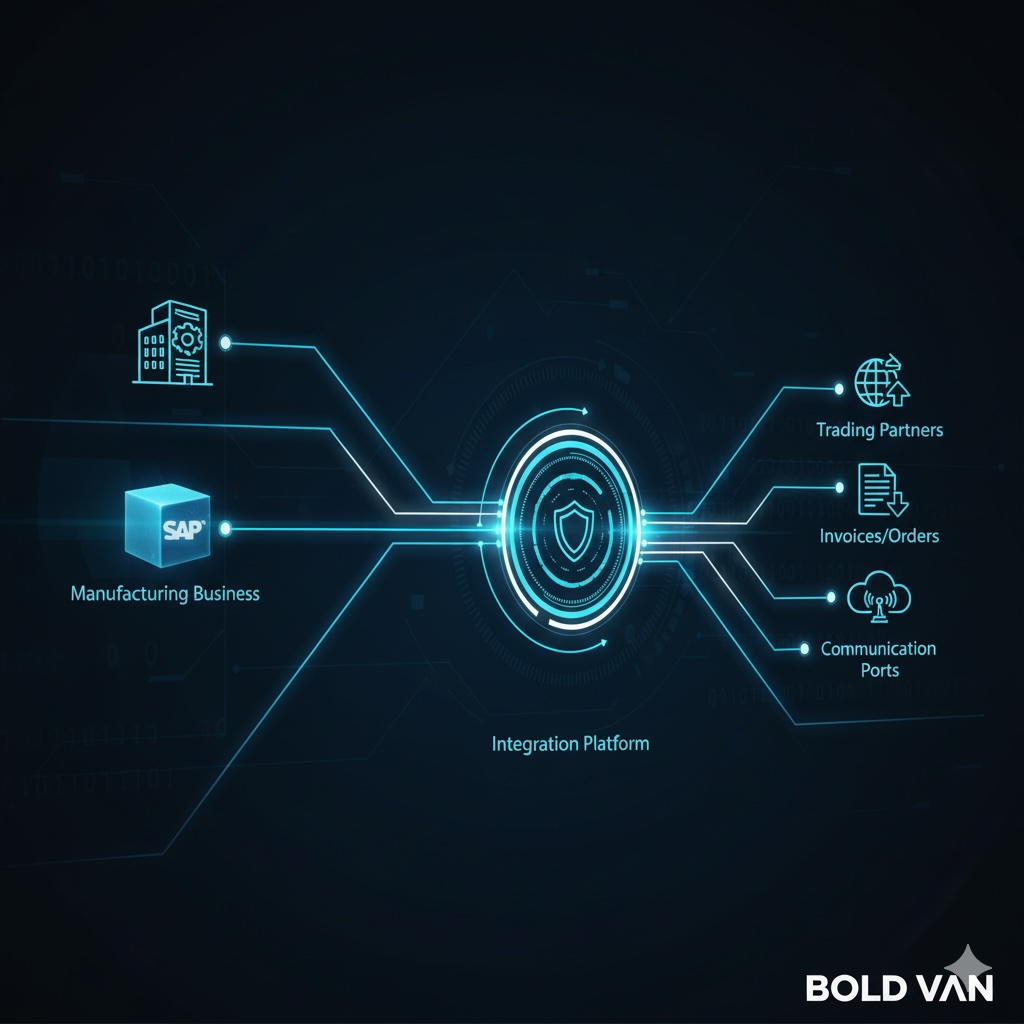
BOLD VAN connects EDI with ERP systems such as SAP, Oracle ERP, Infor CloudSuite and others. Its mapping also extends to WMS, TMS and e-commerce platforms, including ShipHero, Oracle TMS, Shopify and others. EDI-to-API and API-to-EDI flows can both be part of an integration, although an 812 intended for finance should ultimately reach the application and people responsible for the accounting decision.
Keep syntax acceptance separate from approval. A 997 functional acknowledgment tells the sender whether a document passed the receiver's syntax check. It can report acceptance or rejection. It does not mean the adjustment or its content was accepted by finance.
Mapping and controls that matter
Keep the financial meaning intact
A credit in the sender's records may need different treatment in the recipient's accounts. Define direction from each party's perspective, then test both credit and debit examples. Preserve any available breakdown instead of collapsing an adjustment into a single amount when finance needs to investigate individual differences.
Make exceptions visible to the right owner
Missing invoice references, unfamiliar reasons, disputed amounts and duplicate claims call for different actions. Agree on who reviews each type before launch. Keep EDI validation status separate from matching, approval and posting status so an acknowledged document does not disappear into an unresolved finance queue. BOLD VAN tracks every document in its portal, where customers can search, requeue and report, with notifications when something needs their attention.
Retain a traceable chain
Keep the original 812 connected to the translated adjustment and the finance system's result. If a partner later challenges a deduction, you should be able to see what arrived, what was matched and what your team decided. Related invoice mapping deserves the same care; see our guide to EDI 810 invoice API mapping.
Common pitfalls and best practices
Test the workflow with examples that reflect your partner's published guide and your finance policy. Do not assume a map that handles an original claim will also handle a changed claim or a partial adjustment. Those conditions depend on the agreed implementation.
- Prevent duplicate application. Compare the adjustment's business reference and processing history before a retry. A connection error may occur after the destination accepted the first request.
- Do not infer a missing match. Route an ambiguous invoice or order reference for investigation, even when the amount looks familiar.
- Review reasons before assigning accounts. An unknown partner code should enter a review path rather than silently receive an accounting category.
- Test the complete handoff. Include translation, API response, finance review and reconciliation, not just successful EDI receipt.
When a trading partner changes its requirements, BOLD VAN updates the map, and minor changes are typically handled at no cost. New maps are typically ready to test in about two days. Your team should still retest matching and approval behavior whenever a change affects the information finance relies on.
An effective 812 workflow gives you a defensible path from a partner's claim to a finance decision. If adjustments are being rekeyed or reaching your ledger without enough context, explore BOLD Integration for mapping EDI into your existing systems and platform API workflows.
Frequently asked questions
What is an EDI 812 used for?
An EDI 812 Credit/Debit Adjustment communicates or requests a financial adjustment between trading partners. It describes a claim or change related to a commercial transaction, but it does not transfer funds.
Can an EDI 812 be posted automatically to an ERP?
An integration can route a matched adjustment into an ERP workflow, but posting should follow your finance approval policy. Missing references, unclear reasons and disputed amounts should be reviewed before they affect the ledger.
Does a 997 acknowledgment approve an EDI 812 adjustment?
No. A 997 functional acknowledgment tells the sender whether a document passed the receiver's syntax check. It can report acceptance or rejection, not approval of the adjustment's business content.
What should you check before mapping an 812 to a platform API?
Check the trading partner's published EDI implementation guide, the X12 version, the destination platform's documentation and your finance approval rules. Test credit and debit direction, matching, exceptions and retries.